44, and why the convention matters more than the number
This site's count of 44 European countries comes straight from the UN's M49 geographic classification, the same source used for every other continent count on this site, including the world total of 195. Under that scheme, Russia is counted as a single European country in full, even though most of its territory and land area lie in Asia. Türkiye, Cyprus, Armenia, Georgia, and Azerbaijan, meanwhile, are counted as Asian, even though each has a real claim to a European identity: Türkiye's largest city straddles the Bosphorus, Cyprus is a full EU member state, and all three Caucasus states sit at the edge of European institutions and competitions. There is no factual error in either direction, only a different rule for where a continent's dividing line falls on a map that was never drawn with continents in mind.
Why published answers range from 44 to 51
Search for this question and you will see numbers well above 44, and none of them are simply wrong. The Council of Europe has 46 member states, since it includes Türkiye and Cyprus but not Kosovo, whose application is still pending, or the Vatican, which sits as an observer rather than a member. Some atlases count Kosovo as an independent country, which adds one more: Kosovo has been recognized by 22 of the 27 EU member states and 28 of NATO's 32 since declaring independence from Serbia in 2008, but it is not a UN member state, since a Security Council recommendation is blocked by Russia and China, neither of which recognizes it, so it sits outside the 195-country count this site uses everywhere. Add the Caucasus states and Türkiye back in as European, and the number climbs past 50. The 51 you sometimes see stacks nearly every one of these edge cases together: Kosovo counted, plus Türkiye, Cyprus, and all three Caucasus states moved from Asia to Europe. None of these are mistakes. They are different, defensible answers to "where does Europe end," and this page's job is to be clear about which one it is using rather than pretend there is only one correct number.
All 44, by subregion
The UN groups Europe into four subregions: Northern, Western, Southern, and Eastern Europe. Southern Europe is the largest of the four with 15 countries, helped by several microstates; Western Europe is the smallest with 9. Here is every country this site counts, with its capital and subregion.
| Country | Capital | Subregion |
|---|---|---|
 Denmark Denmark | Copenhagen | Northern Europe |
 Estonia Estonia | Tallinn | Northern Europe |
 Finland Finland | Helsinki | Northern Europe |
 Iceland Iceland | Reykjavík | Northern Europe |
 Ireland Ireland | Dublin | Northern Europe |
 Latvia Latvia | Riga | Northern Europe |
 Lithuania Lithuania | Vilnius | Northern Europe |
 Norway Norway | Oslo | Northern Europe |
 Sweden Sweden | Stockholm | Northern Europe |
 United Kingdom United Kingdom | London | Northern Europe |
 Austria Austria | Vienna | Western Europe |
 Belgium Belgium | Brussels | Western Europe |
 France France | Paris | Western Europe |
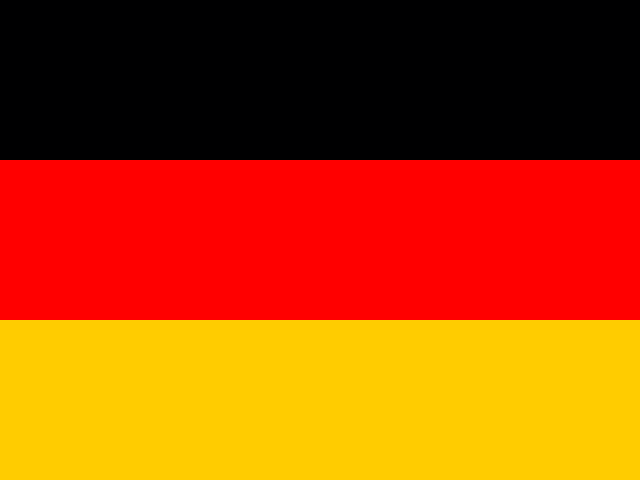 Germany Germany | Berlin | Western Europe |
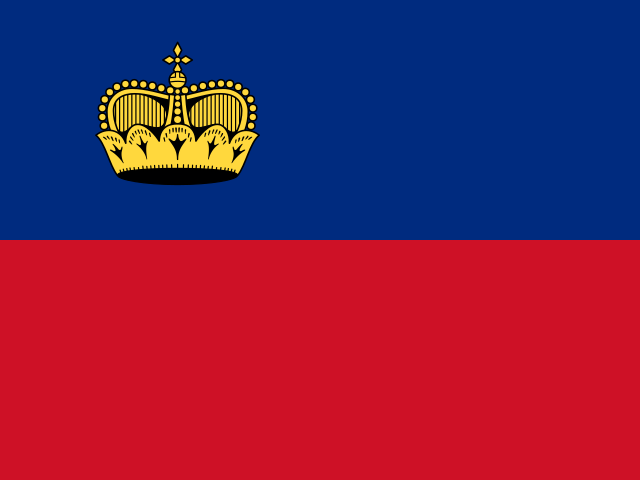 Liechtenstein Liechtenstein | Vaduz | Western Europe |
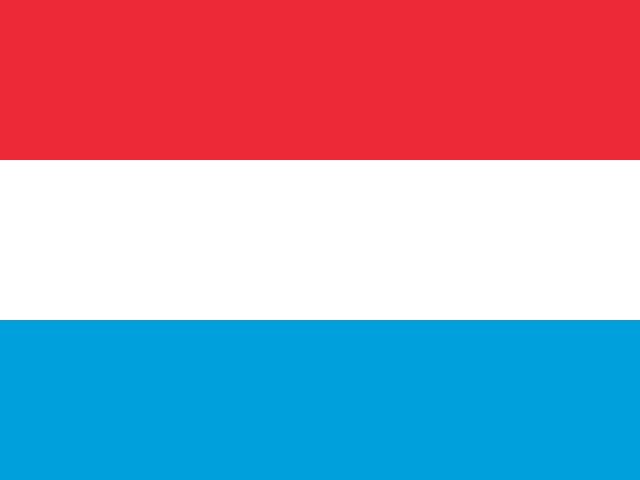 Luxembourg Luxembourg | Luxembourg | Western Europe |
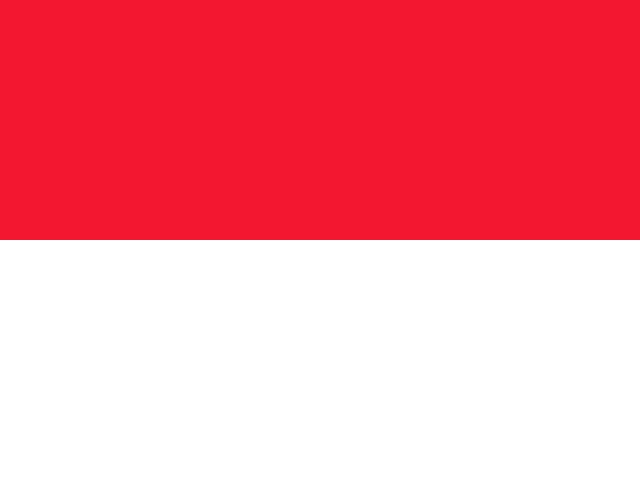 Monaco Monaco | Monaco | Western Europe |
 Netherlands Netherlands | Amsterdam | Western Europe |
 Switzerland Switzerland | Bern | Western Europe |
 Albania Albania | Tirana | Southern Europe |
 Andorra Andorra | Andorra la Vella | Southern Europe |
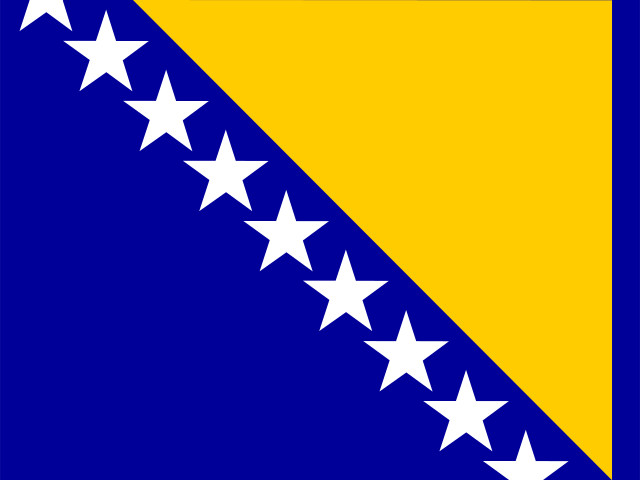 Bosnia and Herzegovina Bosnia and Herzegovina | Sarajevo | Southern Europe |
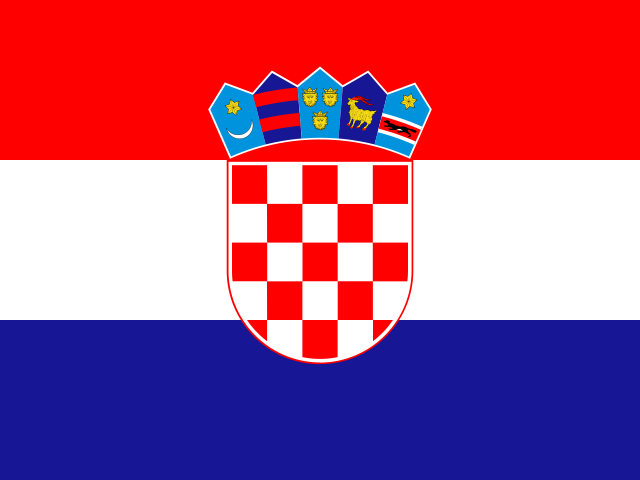 Croatia Croatia | Zagreb | Southern Europe |
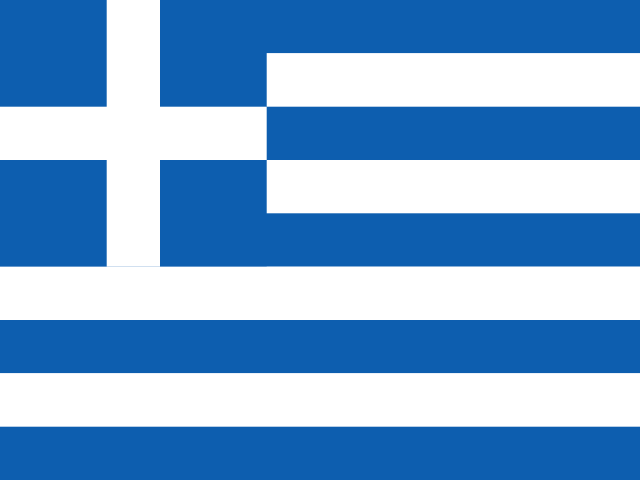 Greece Greece | Athens | Southern Europe |
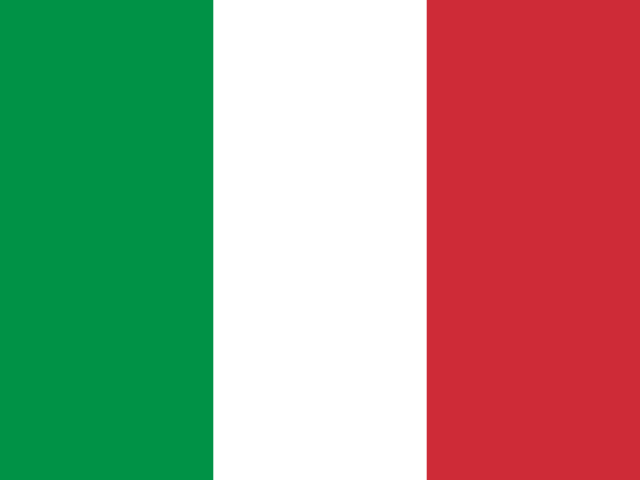 Italy Italy | Rome | Southern Europe |
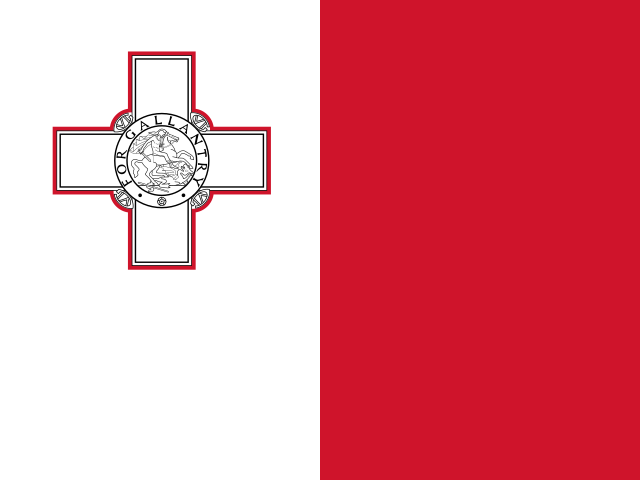 Malta Malta | Valletta | Southern Europe |
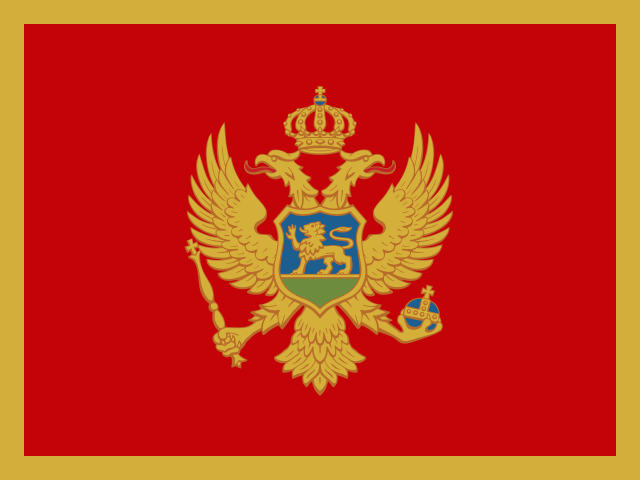 Montenegro Montenegro | Podgorica | Southern Europe |
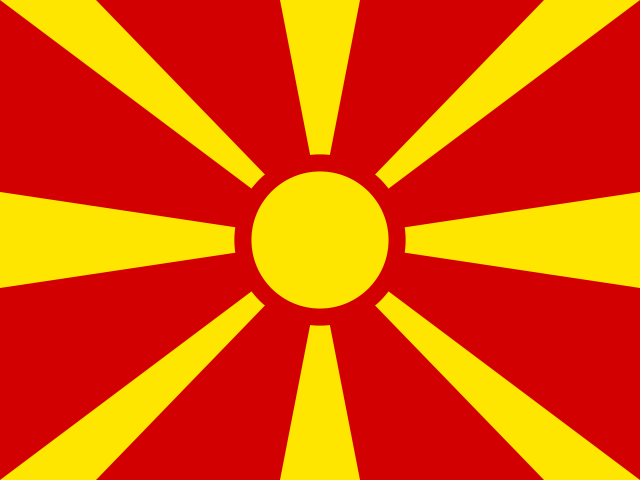 North Macedonia North Macedonia | Skopje | Southern Europe |
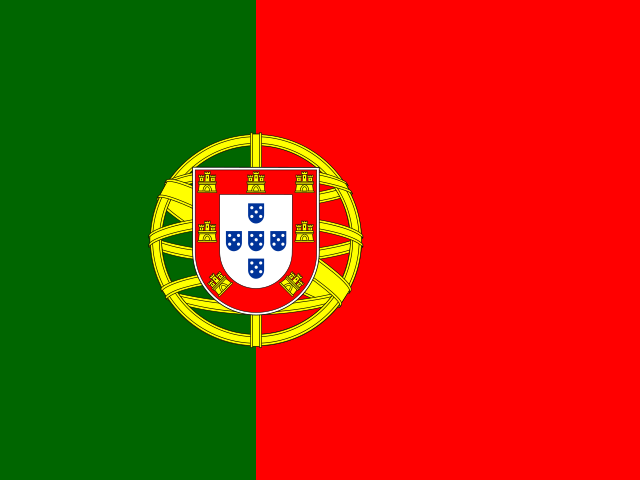 Portugal Portugal | Lisbon | Southern Europe |
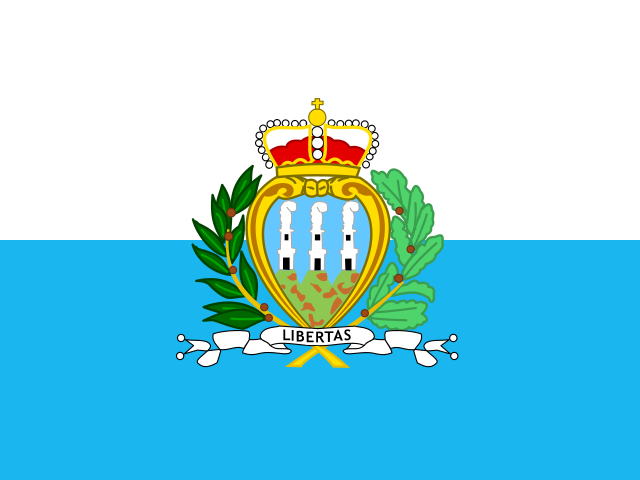 San Marino San Marino | San Marino | Southern Europe |
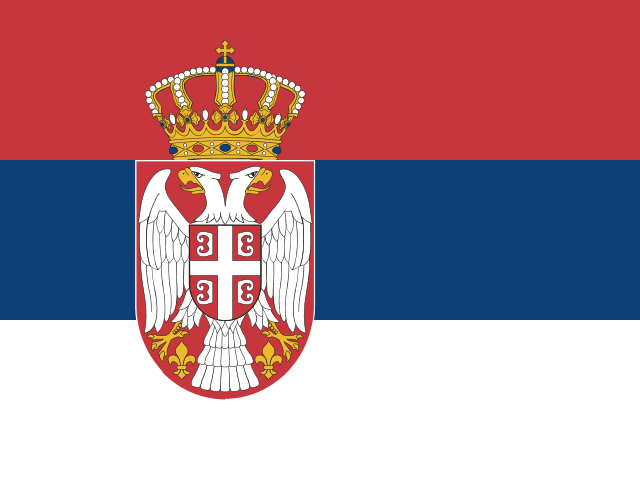 Serbia Serbia | Belgrade | Southern Europe |
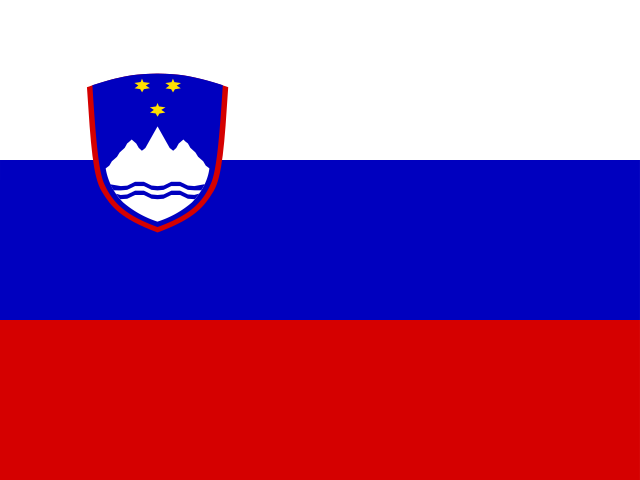 Slovenia Slovenia | Ljubljana | Southern Europe |
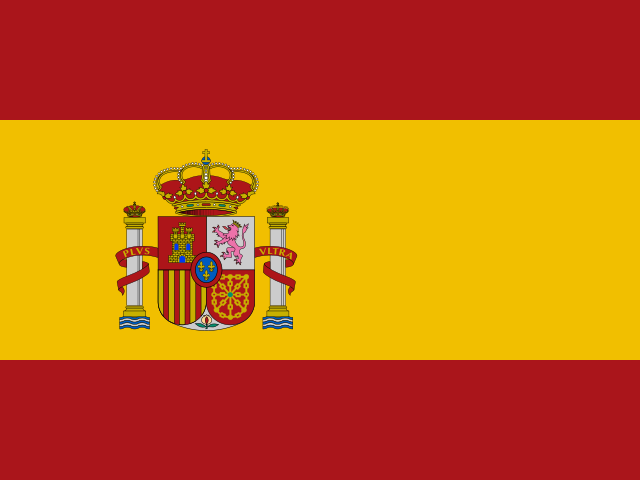 Spain Spain | Madrid | Southern Europe |
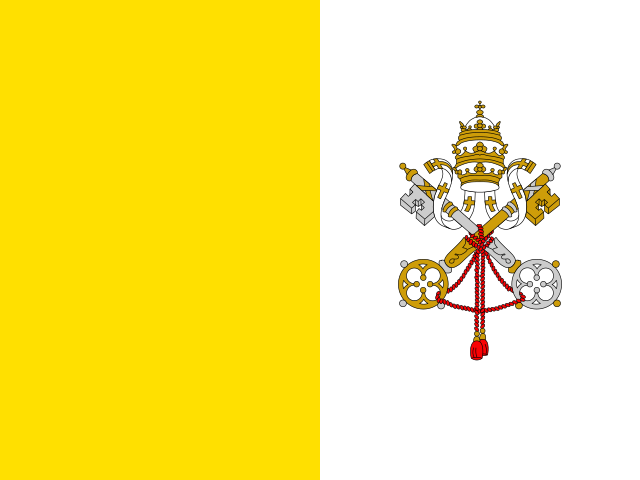 Vatican City Vatican City | Vatican City | Southern Europe |
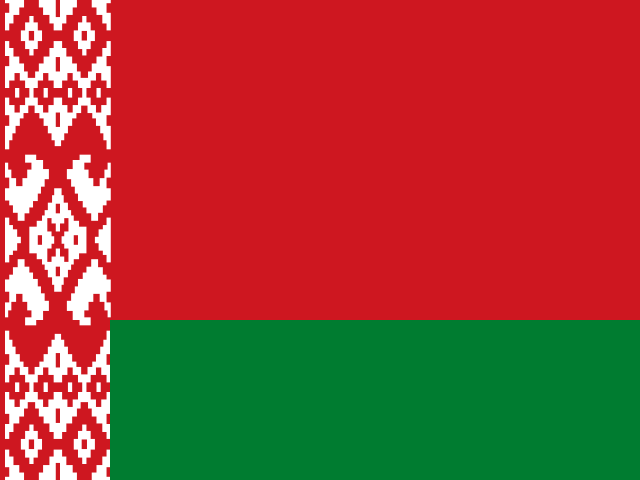 Belarus Belarus | Minsk | Eastern Europe |
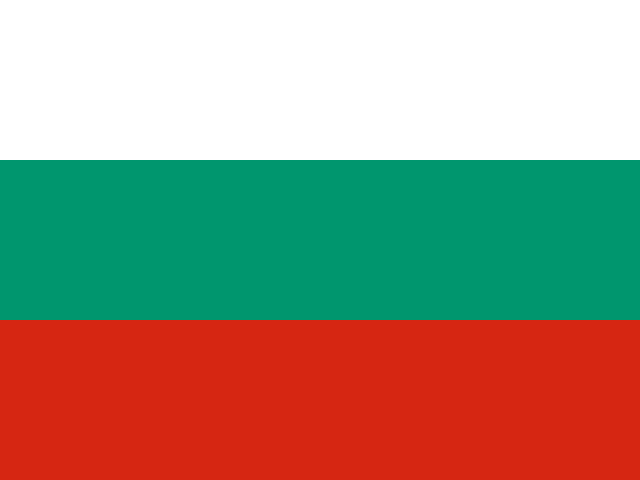 Bulgaria Bulgaria | Sofia | Eastern Europe |
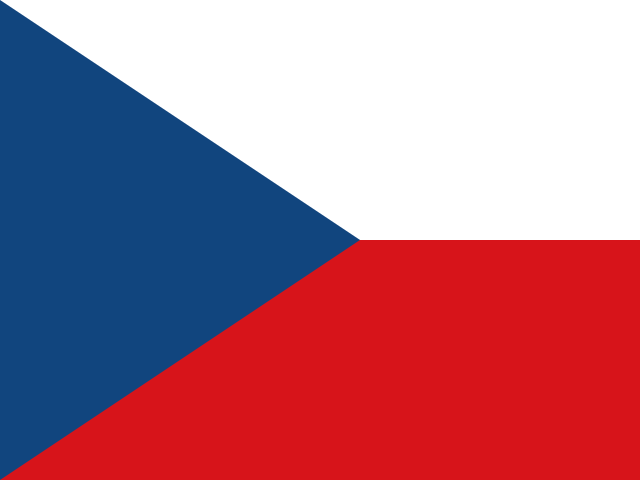 Czechia Czechia | Prague | Eastern Europe |
 Hungary Hungary | Budapest | Eastern Europe |
 Moldova Moldova | Chișinău | Eastern Europe |
 Poland Poland | Warsaw | Eastern Europe |
 Romania Romania | Bucharest | Eastern Europe |
 Russia Russia | Moscow | Eastern Europe |
 Slovakia Slovakia | Bratislava | Eastern Europe |
 Ukraine Ukraine | Kyiv | Eastern Europe |
Largest, smallest, and most populous
By this dataset's convention, Russia is Europe's largest country by a huge margin and its most populous, though roughly three-quarters of Russia's land area sits east of the Ural Mountains in Asia while about four-fifths of its people live west of them, in European Russia. Leave Russia aside as a special case, and Ukraine is the largest country entirely within Europe by area, at about 603,550 square kilometers, followed by metropolitan France at about 551,700. Germany is Europe's most populous country outside Russia, with a little over 83 million people, ahead of the United Kingdom and France. At the other end of the scale, Vatican City is both the smallest European country by area, at under half a square kilometer, and the smallest by population, with fewer than 900 residents, most of them clergy and Swiss Guards rather than a settled civilian population.
Quick facts
- This site counts 44 European countries, following the UN's M49 geographic classification, with Russia counted in full.
- Türkiye, Cyprus, Armenia, Georgia, and Azerbaijan are counted as Asian here, though other bodies place some of them in Europe.
- Kosovo is not counted as a country on this site because it is not a UN member state.
- Russia is Europe's largest and most populous country by this count; Ukraine is the largest country entirely within Europe.
- Vatican City is Europe's smallest country by both area and population.