12, the clean answer among the continent counts
South America is the tidiest of the continent counts on this site. There is no transcontinental state splitting its land across two continents the way Russia does, and no long-running sovereignty dispute the way Taiwan complicates Asia's count. Twelve fully sovereign, UN member states occupy the continent: Argentina, Bolivia, Brazil, Chile, Colombia, Ecuador, Guyana, Paraguay, Peru, Suriname, Uruguay, and Venezuela. Every one of them is a full UN member, so there is no equivalent here of the observer-state edge cases that complicate the world total on the world count page.
The territories that aren't countries
Three names commonly show up on "South American countries" lists that are not sovereign states. French Guiana, on the continent's northeast coast, is legally part of France itself, an overseas department with the same status as a French region back in Europe: it uses the euro, sends representatives to the French parliament, and its residents are French and EU citizens. The Falkland Islands and South Georgia and the South Sandwich Islands, in the South Atlantic, are British Overseas Territories, self-governing in most internal matters but with the United Kingdom responsible for defense and foreign affairs. Argentina disputes British sovereignty over the Falklands, which it calls the Islas Malvinas, and the two countries fought a war over the islands in 1982; the dispute remains unresolved and Argentina continues to press its claim through diplomatic channels.
Two edge cases worth naming
Trinidad and Tobago and Panama sometimes get lumped into South America by mistake, and it is worth being precise about why they are not on this list. Trinidad and Tobago sits just off the Venezuelan coast, close enough that it is sometimes grouped with South America culturally, but it is a Caribbean island nation classified as part of North America. Panama sits at the narrow land bridge joining the Americas; its southern border touches Colombia, but Panama itself is entirely part of Central America, and therefore North America in the UN's continental scheme, not South America.
All 12, with capitals
| Country | Capital |
|---|---|
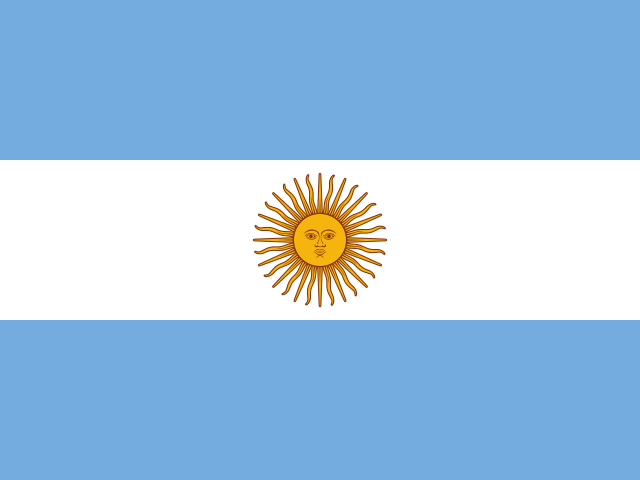 Argentina Argentina | Buenos Aires |
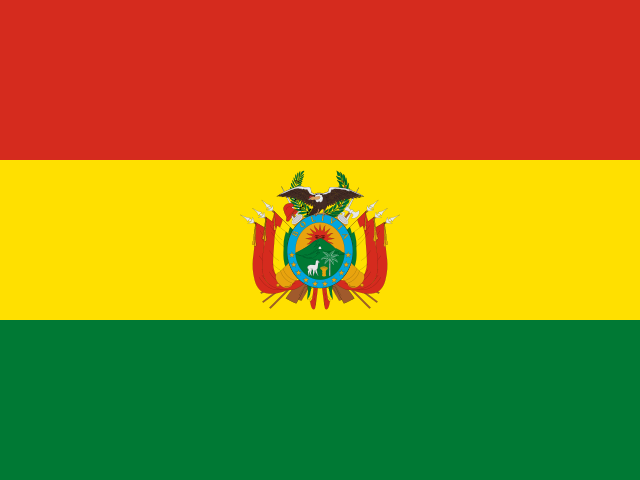 Bolivia Bolivia | Sucre (La Paz is the seat of government) |
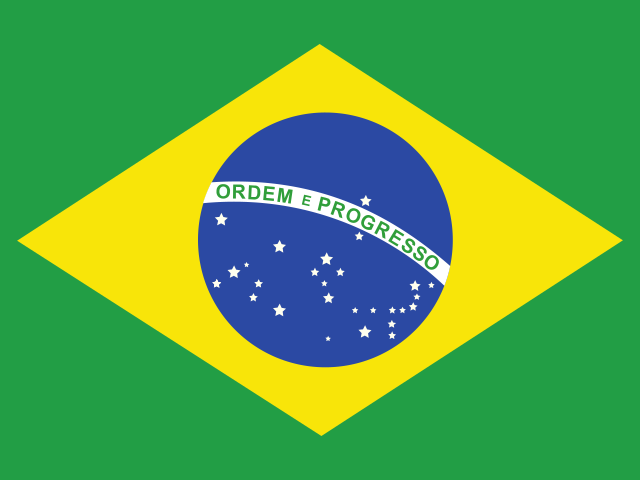 Brazil Brazil | Brasília |
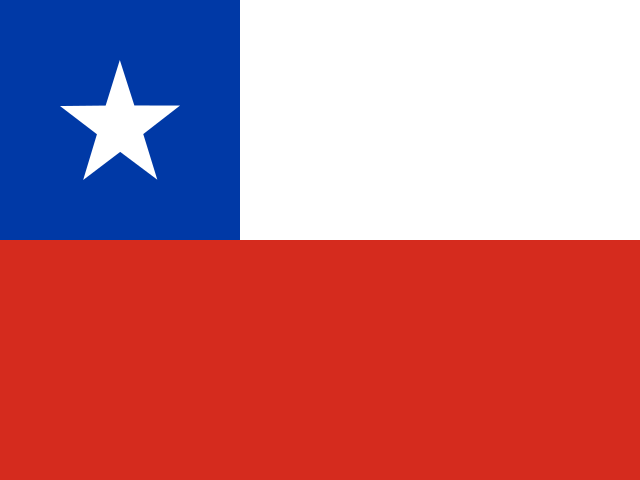 Chile Chile | Santiago |
 Colombia Colombia | Bogotá |
 Ecuador Ecuador | Quito |
 Guyana Guyana | Georgetown |
 Paraguay Paraguay | Asunción |
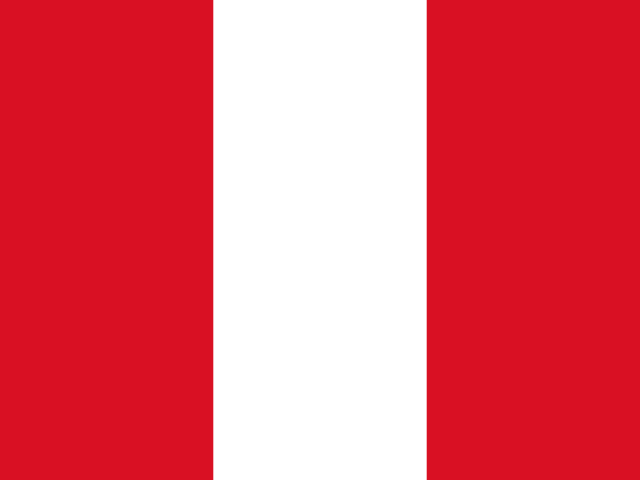 Peru Peru | Lima |
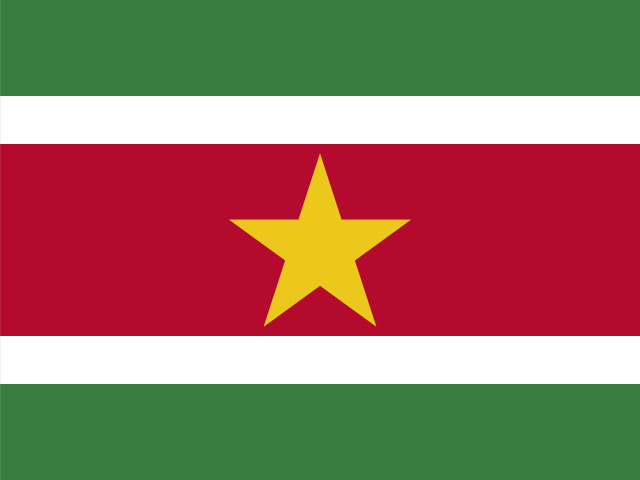 Suriname Suriname | Paramaribo |
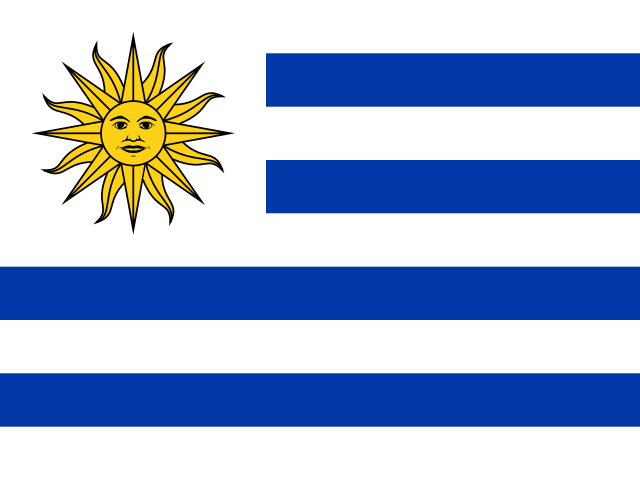 Uruguay Uruguay | Montevideo |
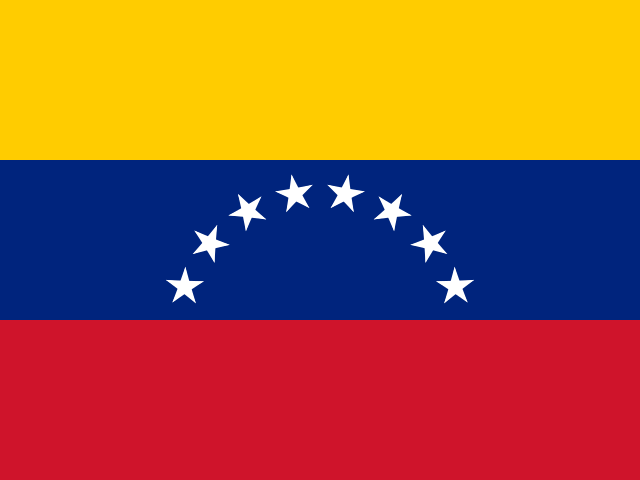 Venezuela Venezuela | Caracas |
See the same 12 countries with every capital and a printable format on the countries and capitals of South America list.
Largest, smallest, and most populous
Brazil dominates the continent by every major measure: it is the largest country by land area, at about 8.5 million square kilometers, close to half the continent and bigger than the next four countries put together, and it is by far the most populous, with roughly 213 million people. Suriname is South America's smallest country by both area and population, at around 163,820 square kilometers and about 640,000 people, making it smaller in population than many cities elsewhere on the continent.
Quick facts
- South America has 12 sovereign, UN member countries.
- French Guiana is a French overseas department, not a country.
- The Falkland Islands and South Georgia are British Overseas Territories, not countries.
- Trinidad and Tobago and Panama are commonly confused with South America but belong to North America.
- Brazil is the largest and most populous country on the continent; Suriname is the smallest by both measures.