All 10 countries that start with P
This list counts the 195 states the United Nations recognizes as members or observers, the same 195 the Geography app and its country quiz use, so the total here will never drift from the total anywhere else on this site. Territories, disputed states, and former names are not counted separately, and the count is generated directly from that dataset rather than typed by hand.
| Country | Capital | Continent | Context |
|---|---|---|---|
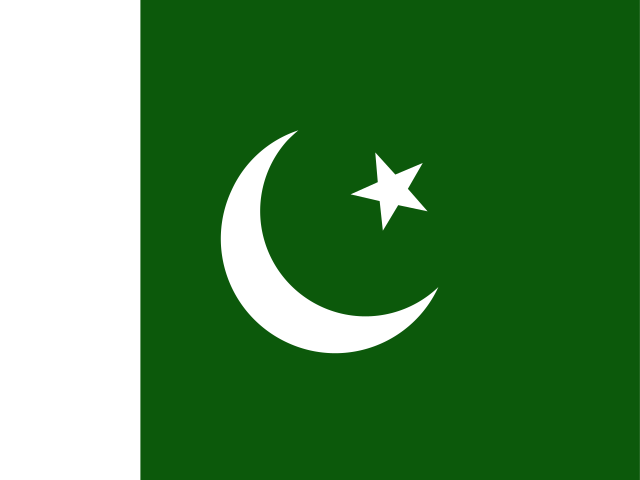 Pakistan Pakistan | Islamabad | Asia | Home to K2, the world's second highest mountain, and to some of the world's oldest urban civilizations along the Indus. |
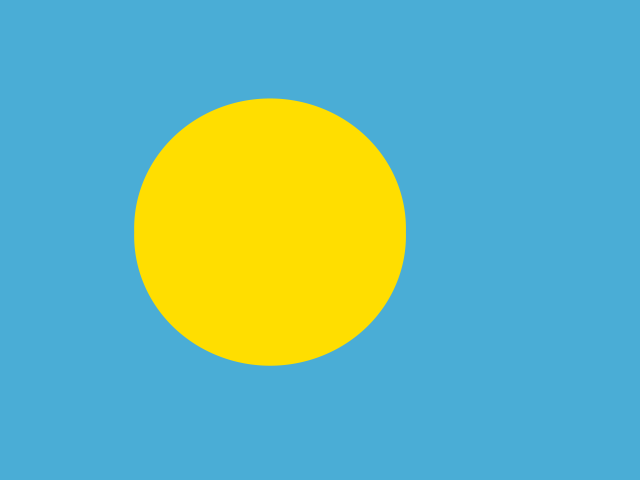 Palau Palau | Ngerulmud | Oceania | A Pacific archipelago nation known for its Rock Islands and Jellyfish Lake. |
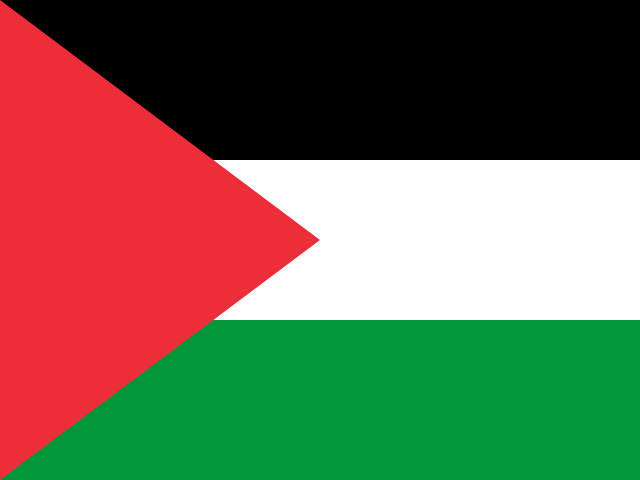 Palestine Palestine | Ramallah | Asia | A United Nations observer state since 2012, administering parts of the West Bank and Gaza with contested borders and status. |
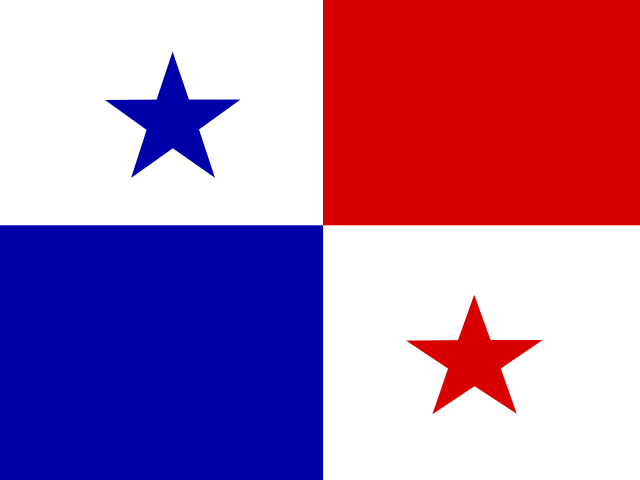 Panama Panama | Panama City | North America | A Central American country whose canal, opened in 1914, links the Atlantic and Pacific Oceans. |
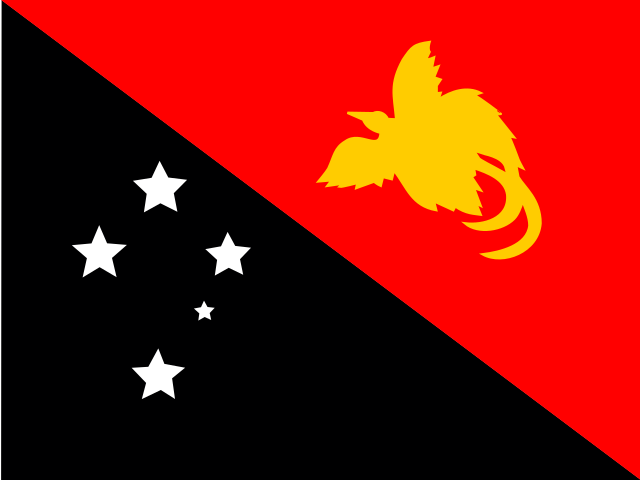 Papua New Guinea Papua New Guinea | Port Moresby | Oceania | One of the most linguistically diverse countries in the world, with more than 800 languages spoken. |
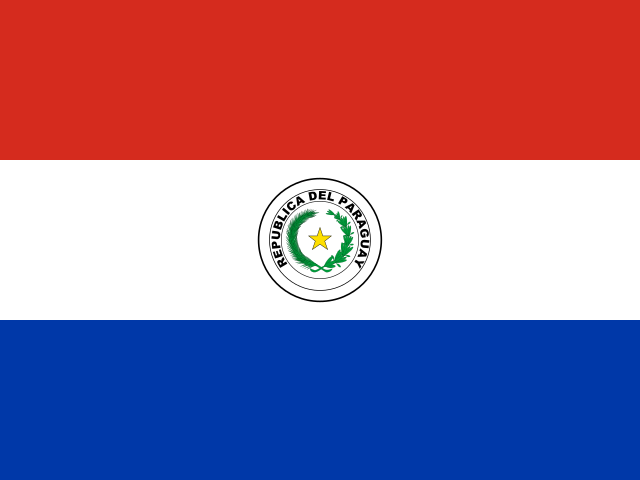 Paraguay Paraguay | Asuncion | South America | A landlocked South American country with two official languages, Spanish and the Indigenous Guarani. |
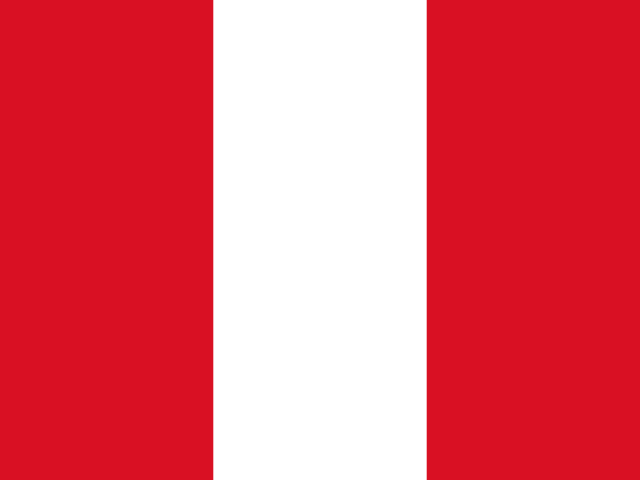 Peru Peru | Lima | South America | Home to Machu Picchu and much of the ancient Inca Empire's heartland. |
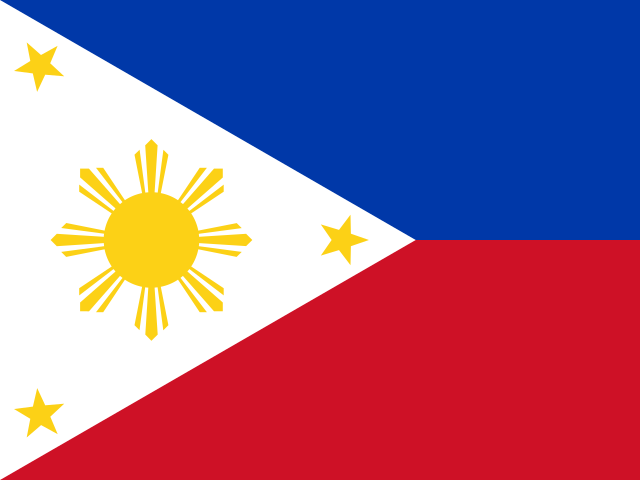 Philippines Philippines | Manila | Asia | An archipelago of more than 7,000 islands in Southeast Asia, a former Spanish and American colony. |
 Poland Poland | Warsaw | Europe | A Central European country whose borders shifted dramatically westward after the Second World War. |
 Portugal Portugal | Lisbon | Europe | Continental Europe's westernmost country, whose maritime explorers helped launch the Age of Discovery. |
Where these ten sit on the map
Asia holds three of the ten: Pakistan, Palestine, and the Philippines, spread from South Asia to the Middle East to the western Pacific. South America contributes Paraguay and Peru, and Oceania contributes Palau and Papua New Guinea, two very differently sized Pacific nations. Panama, in Central America, and Poland and Portugal, at opposite ends of Europe, round out the letter.
Papua New Guinea is the letter's outlier for sheer variety: it is one of the most linguistically diverse countries on Earth, with more than 800 languages spoken across its islands and highlands, a legacy of centuries of isolated valley communities developing separately from one another. Panama's defining feature is engineered rather than natural: the Panama Canal, opened in 1914, cuts across the narrowest point of the isthmus and remains one of the most important shipping routes in the world. Portugal sits at the western edge of continental Europe, the starting point for the maritime voyages that opened the so called Age of Discovery in the 15th century.
Naming edge cases worth knowing
Palestine's status is genuinely disputed rather than a simple naming question. It holds United Nations observer state status, granted in November 2012, which is one level short of full UN membership; it administers parts of the West Bank and Gaza, its borders and capital are contested, and Ramallah functions as its administrative seat while it claims East Jerusalem as its capital. This dataset counts it, alongside Vatican City, as one of the two UN observer states among the 195 total, distinct from the 193 full member states. Papua New Guinea is often shortened to PNG in casual use, and that abbreviation is kept here as an alias rather than a separate entry.
Quick facts
- Ten countries start with P, the smallest total of the seven letters in this batch.
- Three of the ten, Pakistan, Palestine, and the Philippines, are in Asia.
- Palestine is one of only two UN observer states among the 195, alongside Vatican City.
- The Panama Canal, opened in 1914, is the letter's best known piece of engineering.