Japan is a country in Asia, with about 123.4 million people (2025) and an area of 377,969 square kilometres. Its capital is Tokyo, and it has no land borders.
By Team Geography·Last reviewed
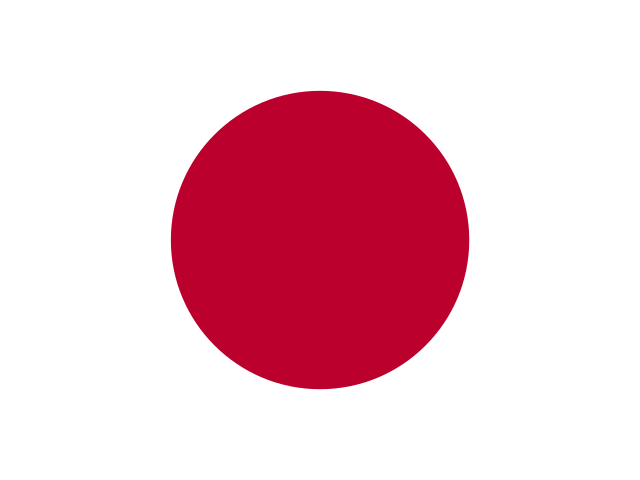
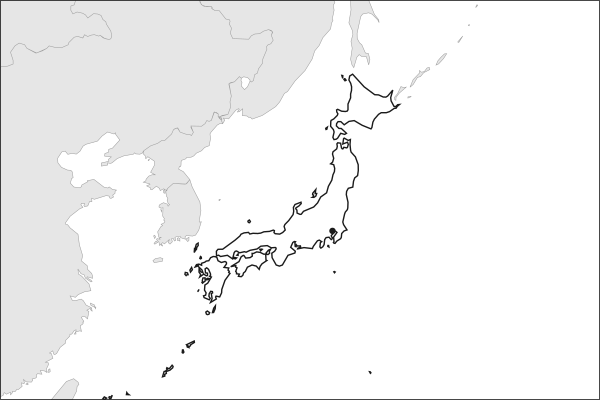
Flag of JapanJapan in solid, land neighbours outlined, capital marked.
377,969 km² (145,935 sq mi) World Bank, surface area. 62nd largest of 195.
Population density
326 people per km²
Land neighbours
None. It has no land borders with another country.
UN status
Member state
Capital coordinates
35.69° N, 139.75° E Tokyo, Natural Earth.
No land borders
Japan shares no land border with another country. Its nearest neighbours are across the sea, as the map above shows.
From the Geography app
The app teaches each country through short hand written lenses: PLACE for physical geography, STORY for history and identity, NOW for the news, and THREAD for the ties between countries. Here is one of Japan's 17, in full.
STORYLens 1 of 17
A first woman in the cabinet office
Sanae Takaichi became Japan's first female prime minister in 2025, more than seven decades after women won the vote in 1945. The Liberal Democratic Party has governed for almost the entire postwar period, and its internal succession historically passed between male faction leaders. Takaichi, a hawk on defense and constitutional revision who served as a senior cabinet minister under Shinzo Abe, broke that pattern without breaking the party's conservative grain.
More on Liberal Democratic Party
The LDP has governed Japan for all but four years since its founding in 1955, the longest unbroken period of single-party dominance among major democracies. Its faction system, party-internal coalitions organized around senior figures, traditionally selected prime ministers through intra-party negotiation rather than a presidential-style primary.
16 more lenses on Japan in the app
PLACE Japan is closer to Asia than many people picture
NOW The demographic laboratory
NOW Invisible supply-chain power
STORY Homogeneous on the surface, layered underneath
THREAD The U.S.-Japan alliance is one of the quiet pillars of Asia
STORY Japan rebuilt itself as a civilian trading state
THREAD Japan is quietly deepening ties across Southeast Asia
NOW A record defense budget under Takaichi
PLACE An archipelago built for the game
STORY A comic that built a footballing nation
NOW Eighth appearance, and the same ceiling
THREAD The league that taught a continent
PLACE Cities strung along the Pacific coast
STORY Order, patience and the long plan
NOW A generation made in Europe's leagues
THREAD An exporter to the wider game
Titles only. The app brings each lens back on a spaced repetition schedule set by how well you knew it: New, Hazy or Clear.
Compare Japan with another country
Opens the country comparison tool with population, area, income and more side by side, every figure dated.
Common questions
What is the capital of Japan?
The capital of Japan is Tokyo. Tokyo lies at about 35.7 degrees north and 139.7 degrees east. Japan is in Asia. It is home to about 123.4 million people. The world capitals quiz on this site tests every capital, and the printable capitals sheets cover each continent.
What is the population of Japan?
About 123.4 million people live in Japan, according to the World Bank figures for 2025. That makes it the 12th most populous of the 195 countries. With an area of 377,969 square kilometres, that is about 326 people per square kilometre.
What countries border Japan?
None. Japan has no land borders with any other country. It is surrounded by sea, so every neighbour of Japan is across the water. It lies in Asia. Its area is 377,969 square kilometres, and about 123.4 million people live there.
How big is Japan?
Japan covers 377,969 square kilometres, or about 145,935 square miles. That makes it the 62nd largest of the 195 countries. The figure is total surface area, which includes inland water such as lakes and rivers. Its population of about 123.4 million gives a density of 326 people per square kilometre.
Japan is a country in Asia, with about 123.4 million people (2025) and an area of 377,969 square kilometres. Its capital is Tokyo, and it has no land borders.
Capital
Tokyo
Continent
Asia
Population
123,366,734 2025, World Bank. 12th of 195.
Area
377,969 km² (145,935 sq mi) World Bank, surface area. 62nd largest of 195.
Population density
326 people per km²
Land neighbours
None. It has no land borders with another country.
UN status
Member state
STORY · from the Geography app
A first woman in the cabinet office
Sanae Takaichi became Japan's first female prime minister in 2025, more than seven decades after women won the vote in 1945. The Liberal Democratic Party has governed for almost the entire postwar period, and its internal succession historically passed between male faction leaders. Takaichi, a hawk on defense and constitutional revision who served as a senior cabinet minister under Shinzo Abe, broke that pattern without breaking the party's conservative grain.
Keep going on your iPhone. Scan for Geography: the world, one country at a time, about five minutes a day. No quizzes and no streaks. playgeography.app/countries/japan/ · Map data: Natural Earth. Figures: World Bank and national sources, as listed on the page.
Geography · Country report
Japan
NameDate
Draw the flag
Colour Japan on the map, then fill in what you find.
Capital
Continent
Population
Area
Languages
Currency
Neighbours
Landmarks
Rivers or mountains
Three things I learned
1
2
3
One question I still have
?
Keep going on your iPhone. Scan for Geography: the world, one country at a time, about five minutes a day. No quizzes and no streaks. playgeography.app/countries/japan/ · Map data: Natural Earth. Figures: World Bank and national sources, as listed on the page.