The Philippines is a country in Asia, in Southeast Asia, with about 116.8 million people (2025) and an area of 300,000 square kilometres. Its capital is Manila, and it has no land borders.
By Team Geography·Last reviewed
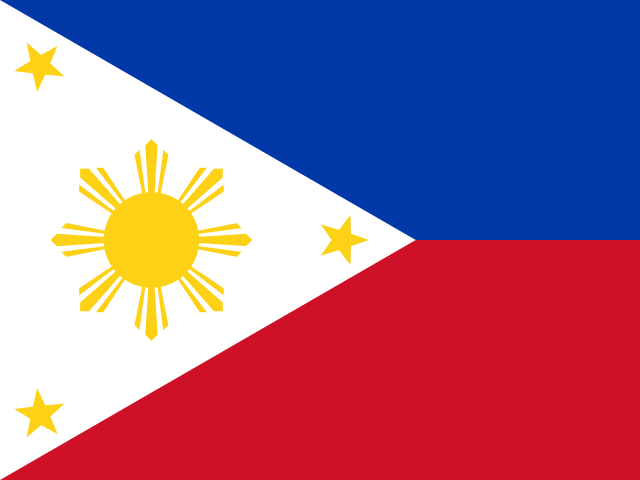
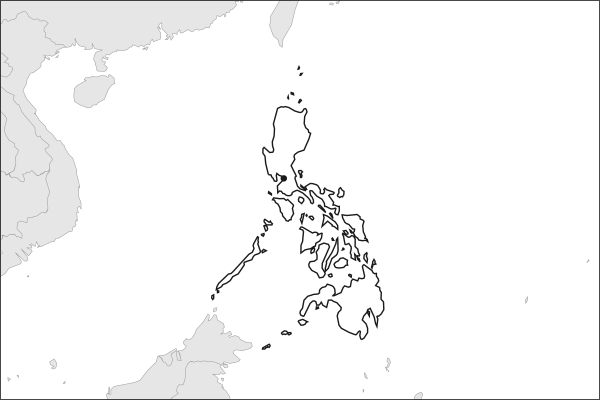
Flag of the PhilippinesThe Philippines in solid, land neighbours outlined, capital marked.
300,000 km² (115,831 sq mi) World Bank, surface area. 72nd largest of 195.
Population density
389 people per km²
Land neighbours
None. It has no land borders with another country.
Official name
Republic of the Philippines
UN status
Member state
Capital coordinates
14.61° N, 120.98° E Manila, Natural Earth.
No land borders
The Philippines shares no land border with another country. Its nearest neighbours are across the sea, as the map above shows.
From the Geography app
The app teaches each country through short hand written lenses: PLACE for physical geography, STORY for history and identity, NOW for the news, and THREAD for the ties between countries. Here is one of the Philippines's 9, in full.
PLACELens 1 of 9
Where the typhoon belt meets the Ring of Fire
Two hazards share one address. The Philippine Sea Plate dives beneath the archipelago into the Philippine Trench, more than ten kilometers deep, and the Philippine Fault runs the length of the country, from Luzon through the Visayas to Mindanao. The storms arrive on the same coasts: tropical cyclones form over the warm western Pacific and track west, and the Philippines is the first land in their path.
More on Philippine Trench
Its deepest sounding, the Galathea Depth, reaches 10,540 meters, among the deepest points in any ocean. Subduction there also feeds the volcanoes that run down the archipelago, including Pinatubo, whose 1991 eruption threw enough sulfate into the stratosphere to cool the whole planet by about half a degree Celsius for two years.
8 more lenses on the Philippines in the app
PLACE The Philippines is an archipelago on the front line of the South China Sea
STORY The Philippines carries a unique colonial layering
NOW The Philippines is at the center of the South China Sea standoff
NOW Climate change hits the Philippines harder than almost anywhere
THREAD The U.S.-Philippines alliance is being reactivated
THREAD The Philippines sits at the center of a contested maritime zone
STORY A country organized around working somewhere else
THREAD The crews behind almost everything on the shelf
Titles only. The app brings each lens back on a spaced repetition schedule set by how well you knew it: New, Hazy or Clear.
Compare the Philippines with another country
Opens the country comparison tool with population, area, income and more side by side, every figure dated.
Common questions
What is the capital of the Philippines?
The capital of the Philippines is Manila. Manila lies at about 14.6 degrees north and 121.0 degrees east. The Philippines is in Asia, in the region often called Southeast Asia. It is home to about 116.8 million people. The world capitals quiz on this site tests every capital, and the printable capitals sheets cover each continent.
What is the population of the Philippines?
About 116.8 million people live in the Philippines, according to the World Bank figures for 2025. That makes it the 14th most populous of the 195 countries. With an area of 300,000 square kilometres, that is about 389 people per square kilometre.
What countries border the Philippines?
None. The Philippines has no land borders with any other country. It is surrounded by sea, so every neighbour of the Philippines is across the water. It lies in Asia, in the region often called Southeast Asia. Its area is 300,000 square kilometres, and about 116.8 million people live there.
How big is the Philippines?
The Philippines covers 300,000 square kilometres, or about 115,831 square miles. That makes it the 72nd largest of the 195 countries. The figure is total surface area, which includes inland water such as lakes and rivers. Its population of about 116.8 million gives a density of 389 people per square kilometre.
The Philippines is a country in Asia, in Southeast Asia, with about 116.8 million people (2025) and an area of 300,000 square kilometres. Its capital is Manila, and it has no land borders.
Capital
Manila
Continent
Asia
Region
Southeast Asia
Population
116,786,962 2025, World Bank. 14th of 195.
Area
300,000 km² (115,831 sq mi) World Bank, surface area. 72nd largest of 195.
Population density
389 people per km²
Land neighbours
None. It has no land borders with another country.
Official name
Republic of the Philippines
UN status
Member state
PLACE · from the Geography app
Where the typhoon belt meets the Ring of Fire
Two hazards share one address. The Philippine Sea Plate dives beneath the archipelago into the Philippine Trench, more than ten kilometers deep, and the Philippine Fault runs the length of the country, from Luzon through the Visayas to Mindanao. The storms arrive on the same coasts: tropical cyclones form over the warm western Pacific and track west, and the Philippines is the first land in their path.
Keep going on your iPhone. Scan for Geography: the world, one country at a time, about five minutes a day. No quizzes and no streaks. playgeography.app/countries/philippines/ · Map data: Natural Earth. Figures: World Bank and national sources, as listed on the page.
Geography · Country report
Philippines
NameDate
Draw the flag
Colour the Philippines on the map, then fill in what you find.
Capital
Continent
Population
Area
Languages
Currency
Neighbours
Landmarks
Rivers or mountains
Three things I learned
1
2
3
One question I still have
?
Keep going on your iPhone. Scan for Geography: the world, one country at a time, about five minutes a day. No quizzes and no streaks. playgeography.app/countries/philippines/ · Map data: Natural Earth. Figures: World Bank and national sources, as listed on the page.