23, and the whole story is one convention
The United Nations' own geographic classification, the M49 standard, treats North America as one continent made of three subregions: Northern America, Central America and the Caribbean. This is the convention this site uses, and it is the one behind the North America section of the Geography app. Add up the sovereign states in all three subregions and the total is 23, not 3. Some school atlases and casual usage draw the line differently, treating "North America" as just Canada, the US and Mexico and putting Central America and the Caribbean in their own regions, which is the main reason the same question gets answered so differently depending on where you look.
All 23, by subregion
The UN's M49 scheme splits North America into Northern America (2 sovereign states here, since Bermuda, Greenland and Saint Pierre and Miquelon are territories, not countries), Central America (8, and yes, Mexico is one of them under this scheme rather than part of Northern America), and the Caribbean (13, the largest group). Here is every country, sorted by subregion, with its capital.
| Country | Capital | Subregion |
|---|---|---|
 Canada Canada | Ottawa | Northern America |
 United States United States | Washington, D.C. | Northern America |
 Belize Belize | Belmopan | Central America |
 Costa Rica Costa Rica | San Jose | Central America |
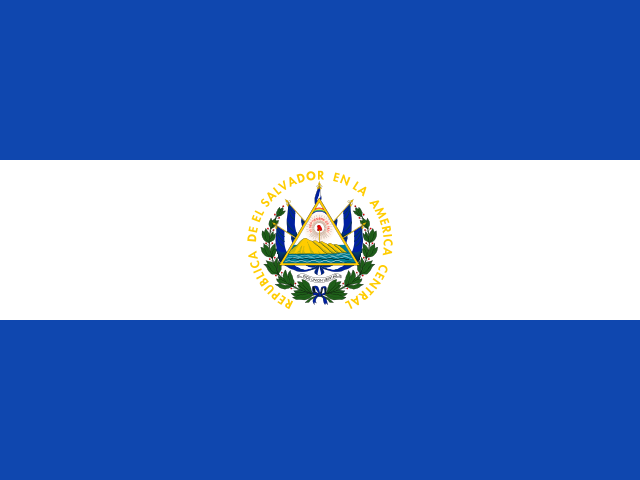 El Salvador El Salvador | San Salvador | Central America |
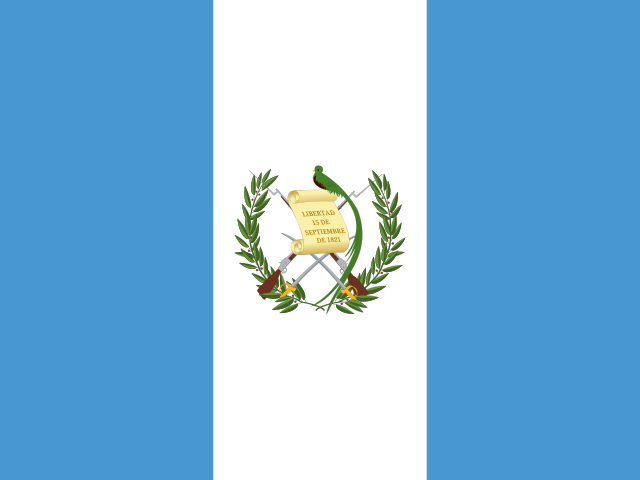 Guatemala Guatemala | Guatemala City | Central America |
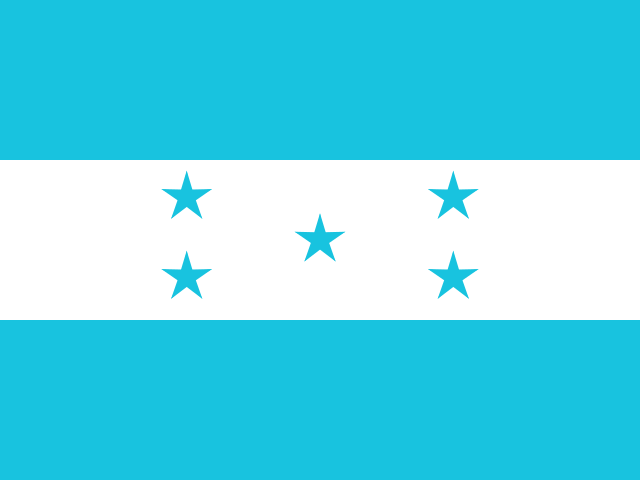 Honduras Honduras | Tegucigalpa | Central America |
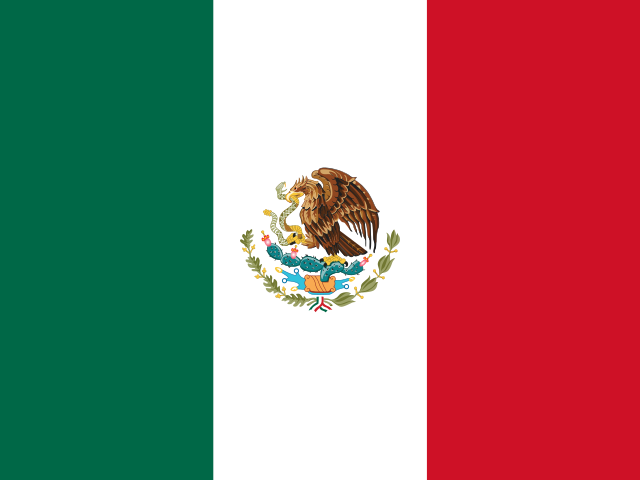 Mexico Mexico | Mexico City | Central America |
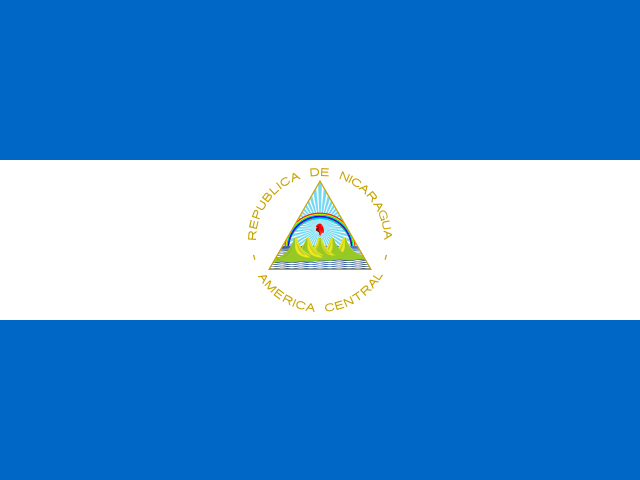 Nicaragua Nicaragua | Managua | Central America |
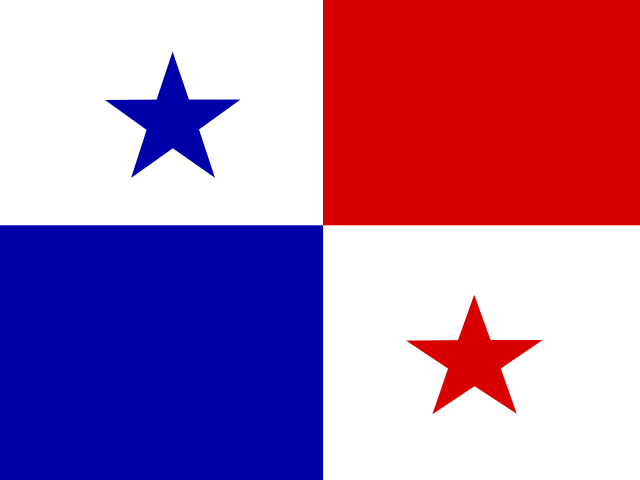 Panama Panama | Panama City | Central America |
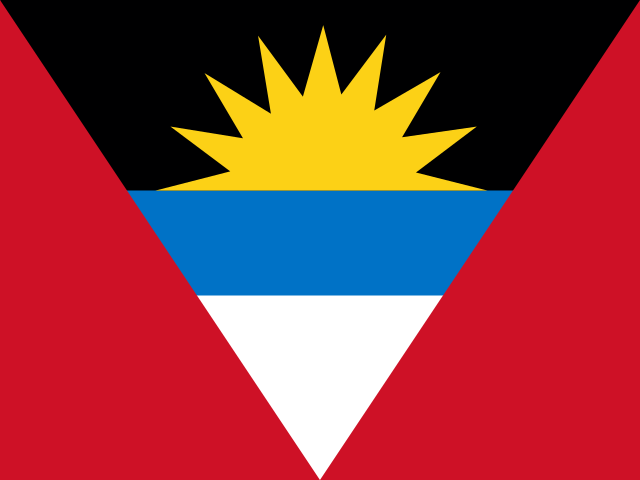 Antigua and Barbuda Antigua and Barbuda | Saint John's | Caribbean |
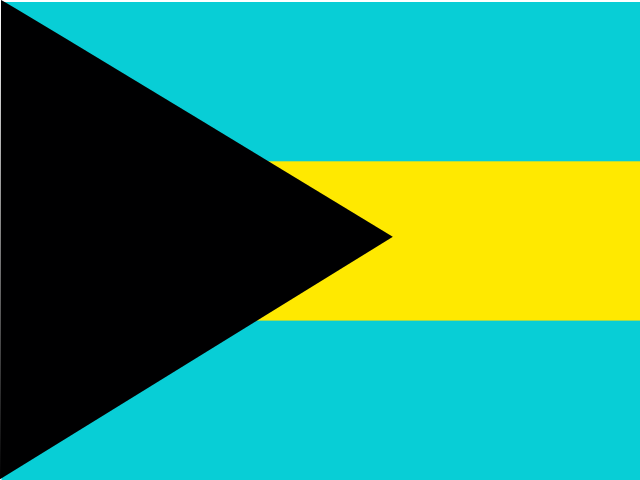 Bahamas Bahamas | Nassau | Caribbean |
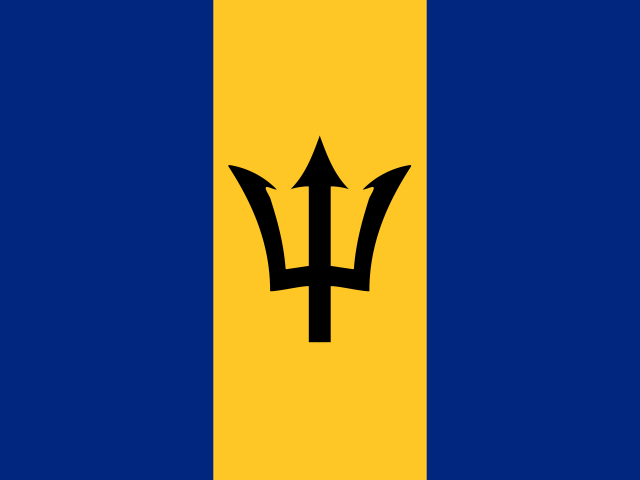 Barbados Barbados | Bridgetown | Caribbean |
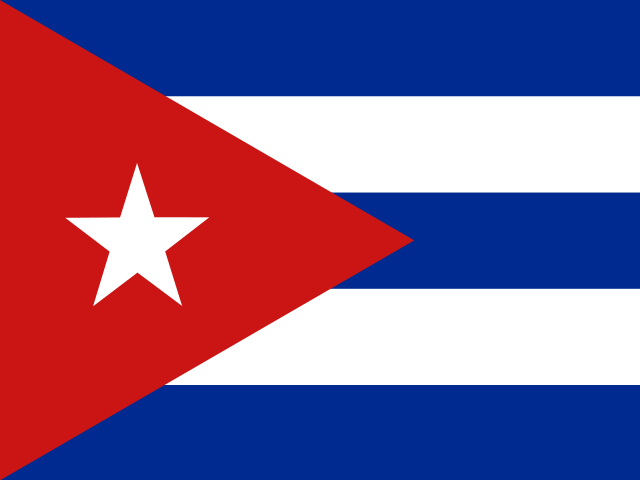 Cuba Cuba | Havana | Caribbean |
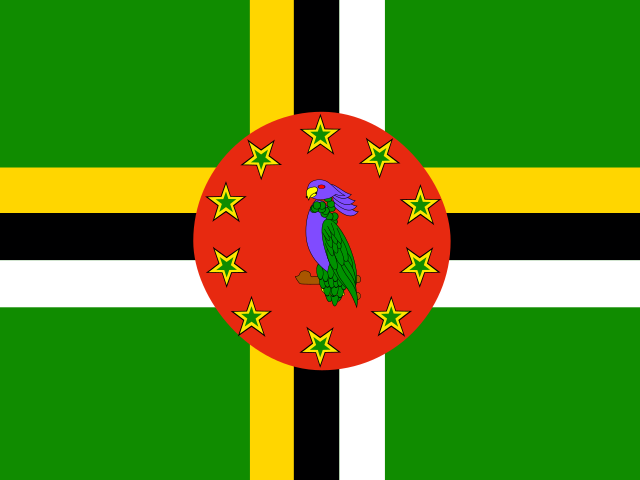 Dominica Dominica | Roseau | Caribbean |
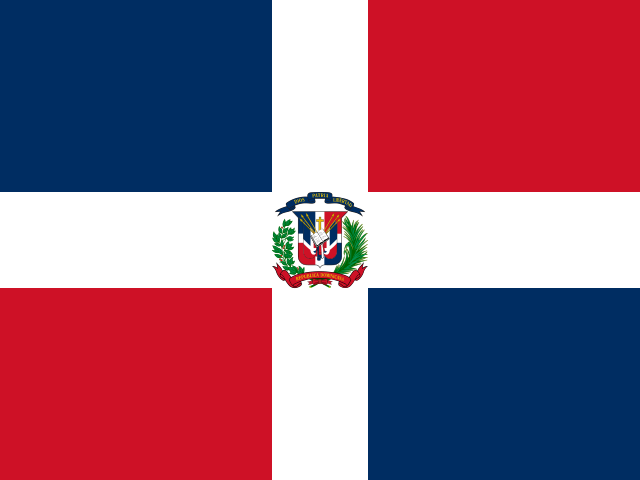 Dominican Republic Dominican Republic | Santo Domingo | Caribbean |
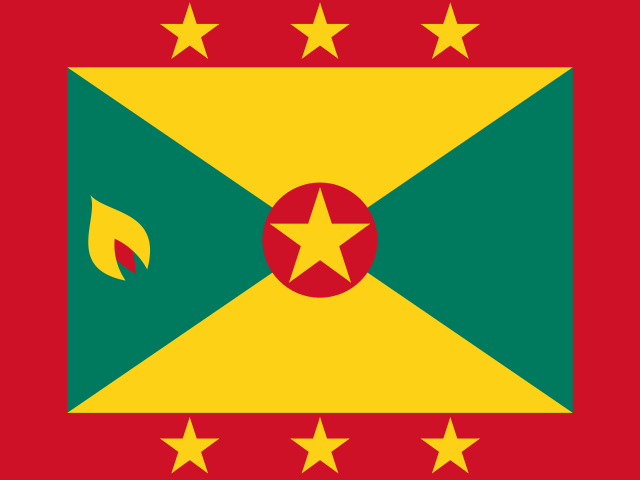 Grenada Grenada | Saint George's | Caribbean |
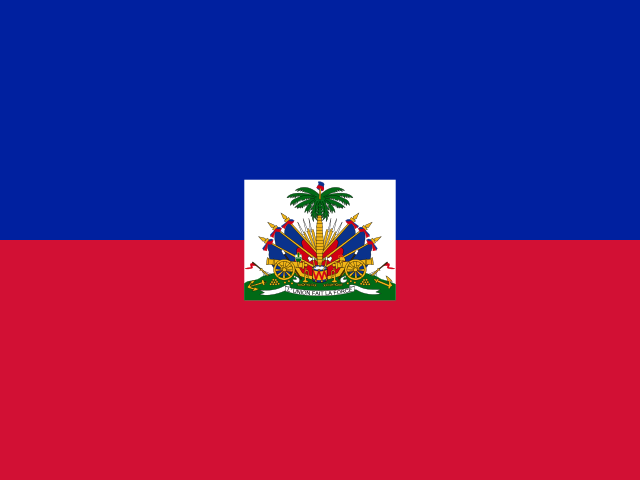 Haiti Haiti | Port-au-Prince | Caribbean |
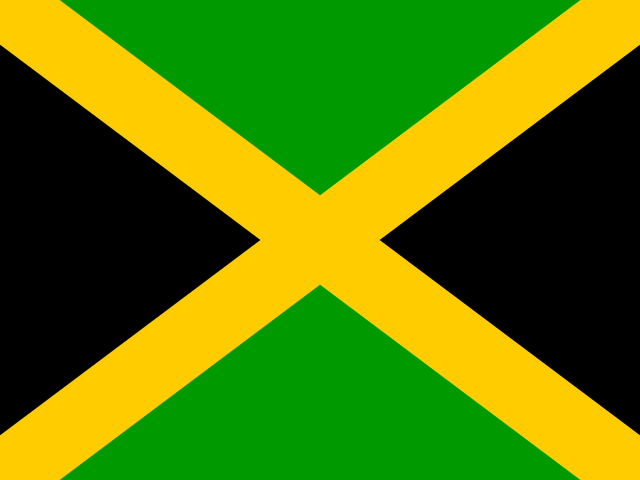 Jamaica Jamaica | Kingston | Caribbean |
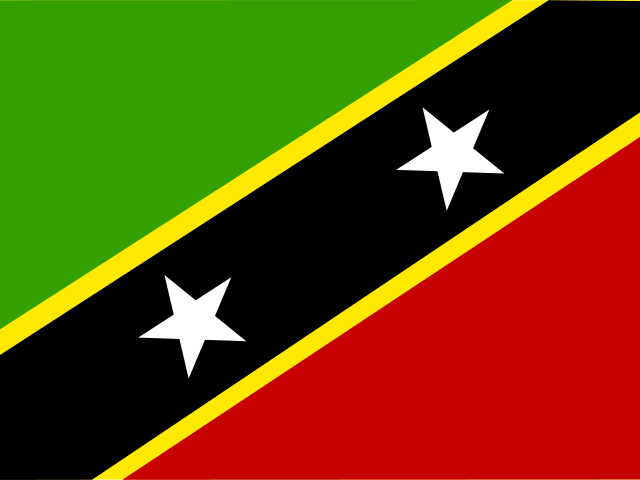 Saint Kitts and Nevis Saint Kitts and Nevis | Basseterre | Caribbean |
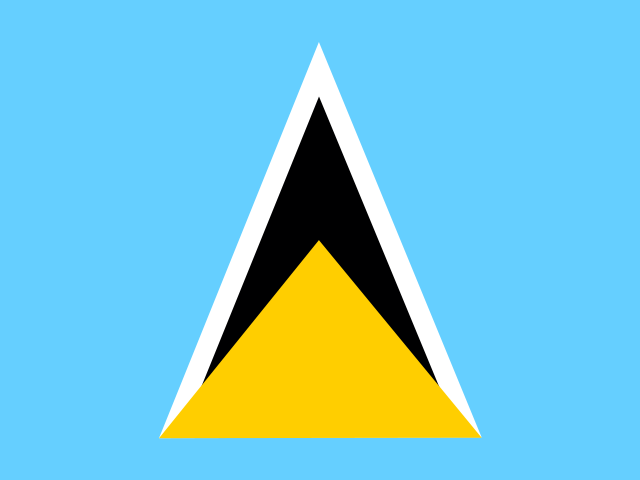 Saint Lucia Saint Lucia | Castries | Caribbean |
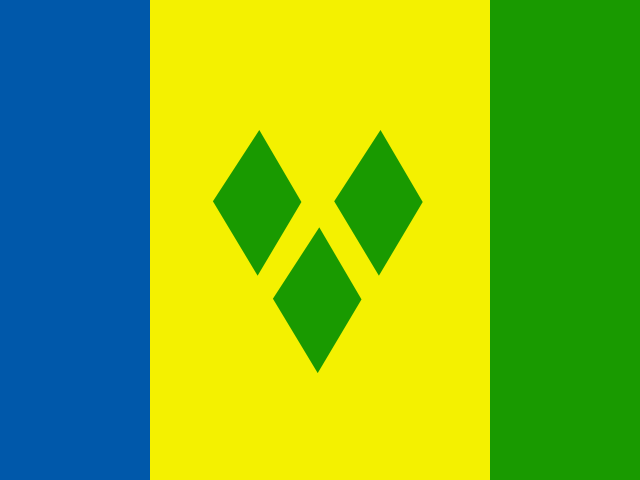 Saint Vincent and the Grenadines Saint Vincent and the Grenadines | Kingstown | Caribbean |
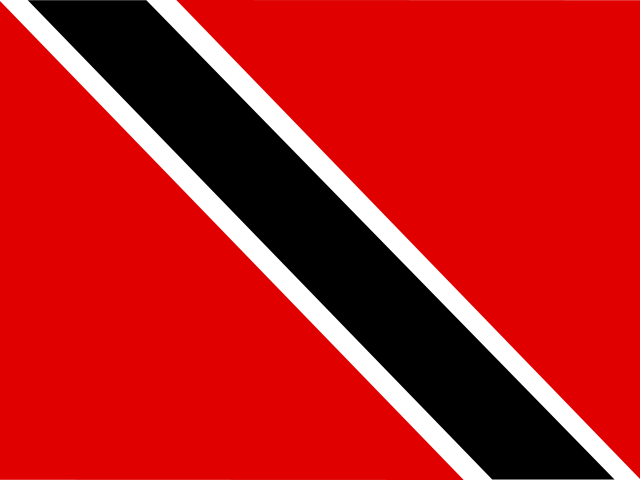 Trinidad and Tobago Trinidad and Tobago | Port of Spain | Caribbean |
Why the count in your head might be 3, and why some say 41
Three is the answer if "North America" means only the mainland continental countries north of Panama's border with Colombia and south of the Caribbean, which is how many school curricula and general audiences use the term, treating "Central America" and "the Caribbean" as separate regions rather than parts of North America. Forty one or more shows up when a count includes non sovereign territories alongside the 23 countries: Greenland (an autonomous territory of Denmark), Puerto Rico (a US territory), Bermuda and the Cayman Islands (British Overseas Territories), and more than a dozen other islands and enclaves that are not independent states. See how big Greenland actually is for more on the largest of these. None of the 23 in the table above is a territory: every one is a UN member state.
Largest, smallest, and most populous
By total area, Canada is the largest country in North America and the second largest in the world after Russia, at 9.98 million square kilometers including its inland waters. The United States is the most populous, with about 342 million people in 2025 according to World Bank estimates. Saint Kitts and Nevis, a two island nation in the Eastern Caribbean, is both the smallest North American country by land area, at 260 square kilometers, and the smallest by population, at under 47,000 people.
Quick facts
- North America has 23 countries under the UN's M49 convention: 2 in Northern America, 8 in Central America, and 13 in the Caribbean.
- Mexico is classified as Central American, not Northern American, under this scheme.
- Canada is the largest North American country by area; the United States is the most populous.
- Saint Kitts and Nevis is the smallest North American country, by both area and population.
- Greenland, Puerto Rico, Bermuda and the Cayman Islands are territories, not countries, and are not among the 23.