All 8 countries that start with E
This list counts the 195 states the United Nations recognizes as members or observers, the same 195 the Geography app and its country quiz use, so the total here will never drift from the total anywhere else on this site. Territories, disputed states, and former names are not counted separately, and the count is generated directly from that dataset rather than typed by hand.
| Country | Capital | Continent | Context |
|---|---|---|---|
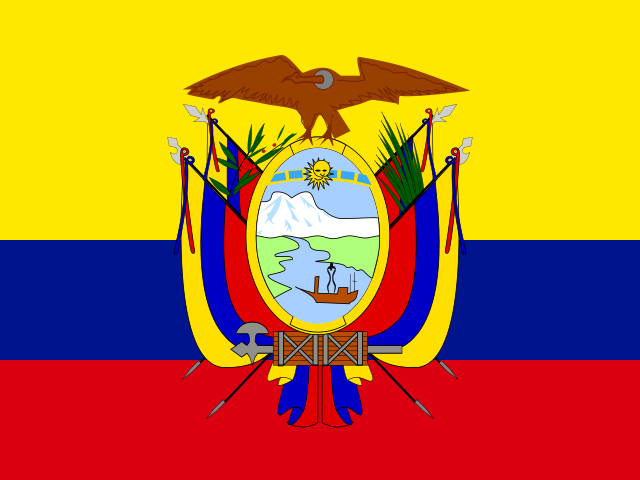 Ecuador Ecuador | Quito | South America | A South American country named for the equator, which crosses it just north of Quito. |
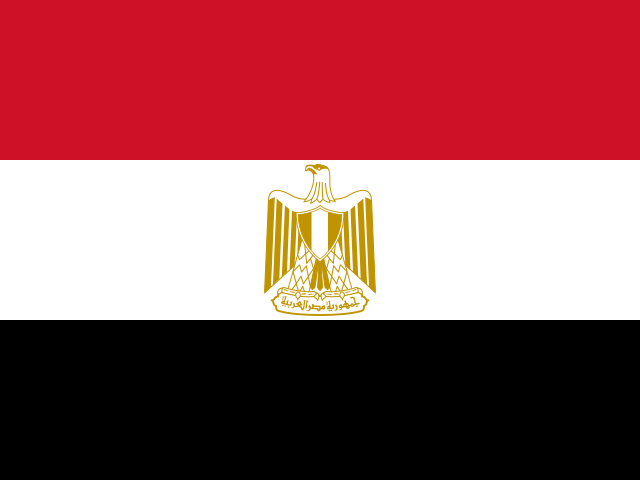 Egypt Egypt | Cairo | Africa | A transcontinental country, mostly in Africa with the Sinai Peninsula in Asia. |
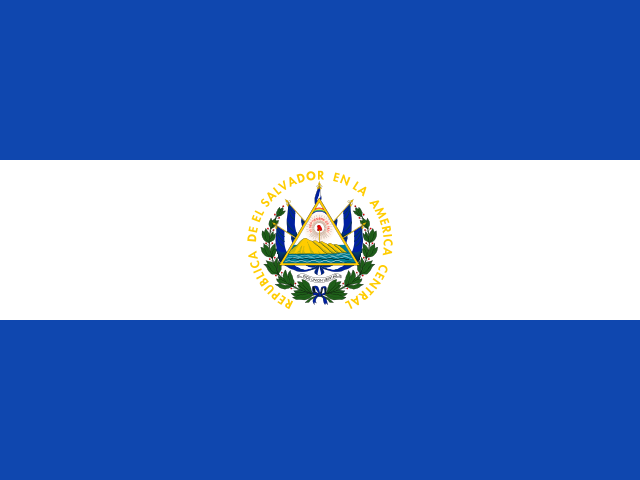 El Salvador El Salvador | San Salvador | North America | The smallest and most densely populated country in mainland Central America. |
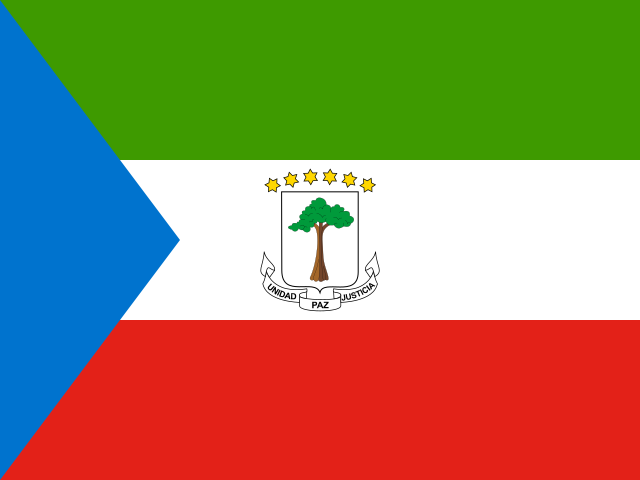 Equatorial Guinea Equatorial Guinea | Malabo | Africa | A small Central African oil producer, the only nation on the continent with Spanish as an official language. |
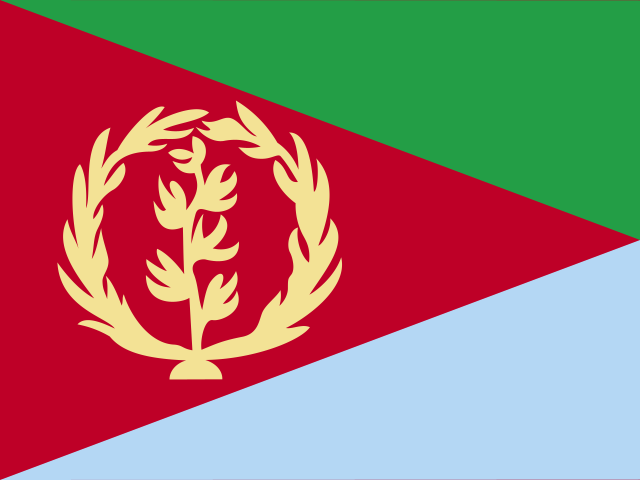 Eritrea Eritrea | Asmara | Africa | A Horn of Africa nation on the Red Sea, independent from Ethiopia since 1993. |
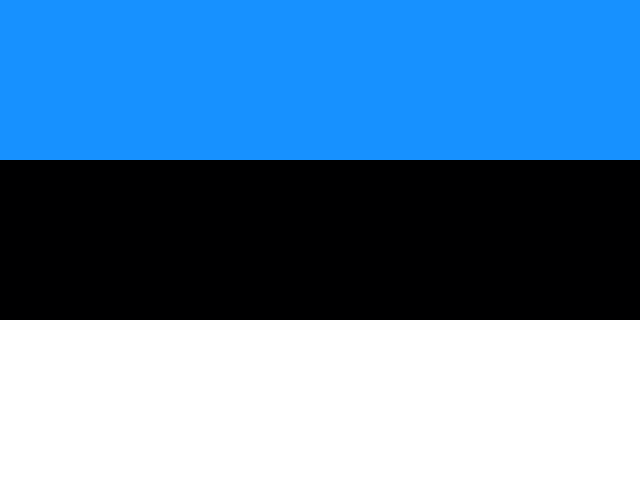 Estonia Estonia | Tallinn | Europe | The northernmost of the three Baltic states, a member of the EU and NATO. |
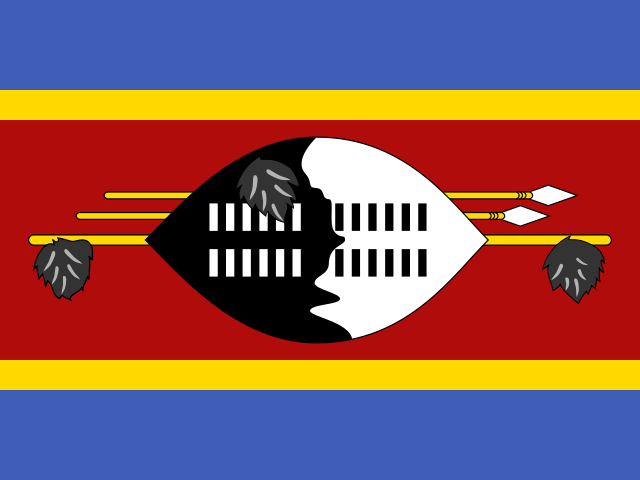 Eswatini Eswatini | Mbabane | Africa | A small landlocked kingdom in southern Africa, known as Swaziland until 2018. |
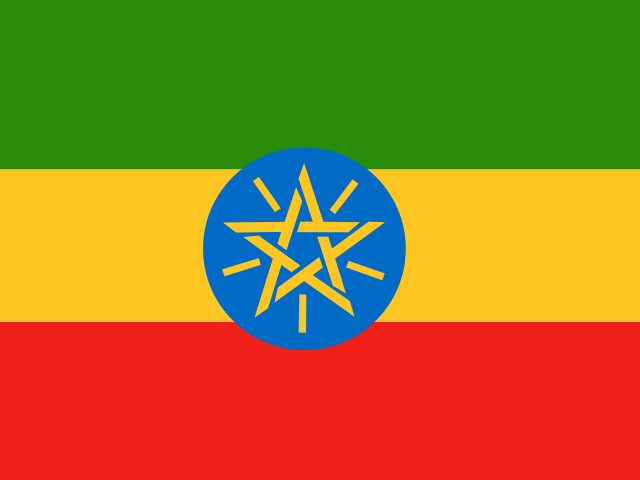 Ethiopia Ethiopia | Addis Ababa | Africa | The only African country never formally colonized, and one of the oldest independent states in the world. |
A short letter with a long African run
Five of the eight E countries, Egypt, Equatorial Guinea, Eritrea, Eswatini, and Ethiopia, are in Africa, which makes E one of the more Africa heavy letters on the map despite its small total count. Ecuador and El Salvador sit in the Americas, Ecuador in South America and El Salvador as the smallest country by area in mainland Central America, and Estonia is the outlier in the Baltic region of Northern Europe, one of the three Baltic states along with Latvia and Lithuania.
Ethiopia carries the most history of the eight. It is one of the oldest continuously independent states in the world and the only African country never formally colonized by a European power, aside from a brief Italian occupation between 1936 and 1941. Eritrea, by contrast, is one of Africa's youngest states, having won independence from Ethiopia itself in 1993 after a thirty year war, a split that still shapes the region's politics today, including Eritrea's lack of direct access to Ethiopia's own coastline.
Estonia sits at the other end of the list geographically and in most other ways too: a European Union and NATO member of about 1.3 million people, it shares a Baltic coastline and a history of Soviet occupation with Latvia and Lithuania rather than anything in common with the five African states on this letter. That range, from a Nordic leaning EU state to some of Africa's oldest and youngest countries, is fairly typical of how little a shared first letter tells you about a country's history or its neighbors.
Naming edge cases worth knowing
Eswatini, formerly Swaziland, is the clearest recent name change on this list: the old name is kept as an alias in this site's data so a search for either one finds the same country. East Timor is not filed here at all, because its official name and its UN membership record both use Timor-Leste, so it appears on the T list instead. Egypt is transcontinental, with the Sinai Peninsula in Asia and the rest of the country in Africa, and this dataset follows the UN's own geoscheme in filing it under Africa.
Quick facts
- Eight countries start with E, out of the 195 UN member and observer states.
- Five of the eight, Egypt, Equatorial Guinea, Eritrea, Eswatini, and Ethiopia, are in Africa.
- Eswatini was known as Swaziland until its king renamed it in April 2018.
- Equatorial Guinea is the only country in Africa with Spanish as an official language.