Romania vs Chad
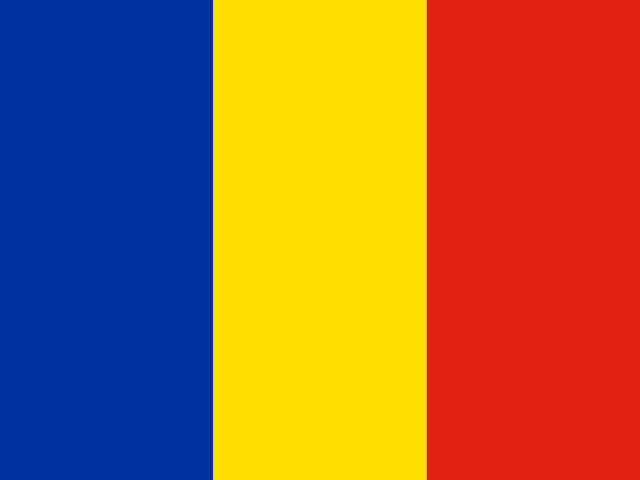
Romania
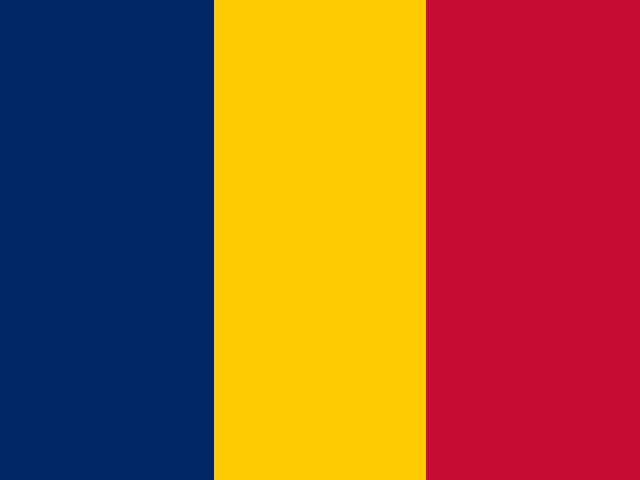
Chad
Romania's and Chad's blue, yellow and red vertical tricolours differ only in the shade of blue, Chad's a darker indigo against Romania's brighter cobalt, a gap easy to miss on a screen. Romania's tricolour dates to 1848; Chad's arrived at independence from France in 1959 to 1960. In 2004 Chad's president raised the resemblance at the United Nations, asking one country to change its flag. Romania's president refused, noting Romania's flag came first, and nothing changed. Both flags still fly as they are.
Indonesia vs Monaco
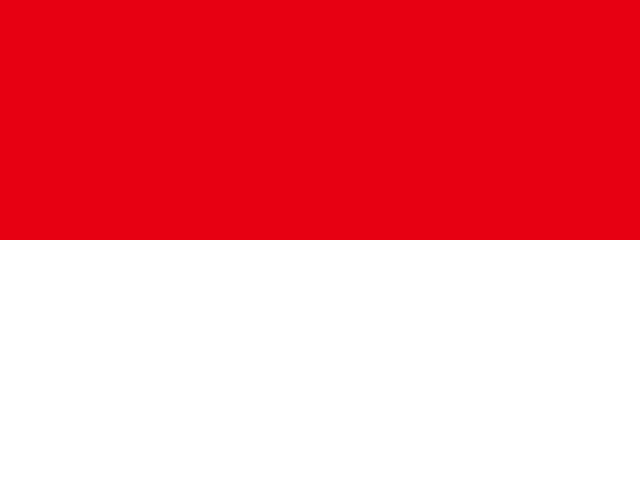
Indonesia
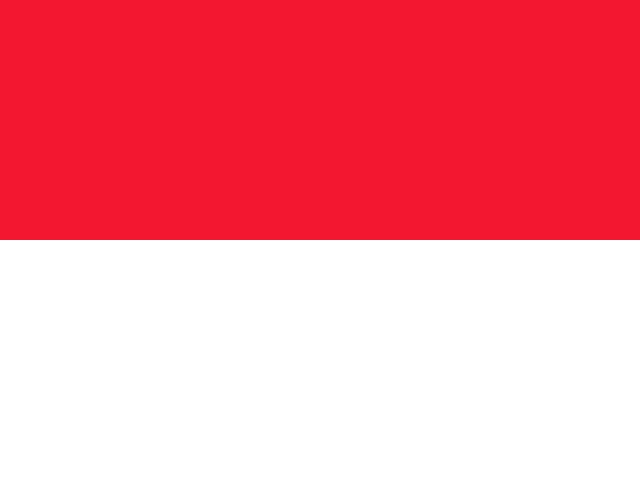
Monaco
Both flags are a plain red stripe over white, and the real difference is shape, not colour: Indonesia's flag is a 2:3 ratio, Monaco's a more square 4:5. Monaco raised the resemblance at an international hydrographic conference in 1952, and the two governments settled it by fixing their proportions apart rather than changing colours. Indonesia's flag revives the medieval Majapahit empire's red and white; Monaco's descends from the ruling Grimaldi family's heraldic colours, so the likeness is coincidence, not shared history.
Netherlands vs Luxembourg
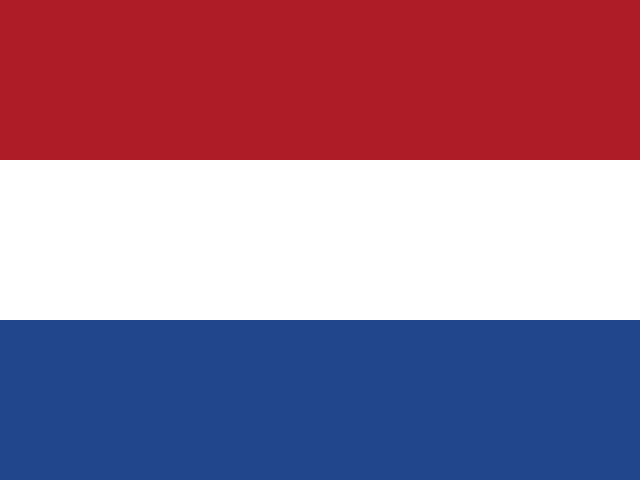
Netherlands
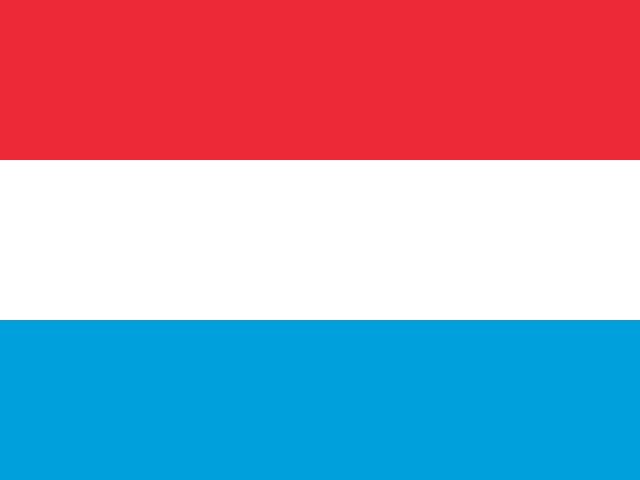
Luxembourg
Both are red, white and blue horizontal tricolours, and the difference is deliberate: Luxembourg's flag law, passed in 1972 and given exact colour specifications in 1993, calls for a lighter sky blue rather than the Netherlands' darker cobalt, specifically so the neighbours would not be confused. The Netherlands uses a 2:3 ratio; Luxembourg a more elongated 3:5. The resemblance is closer to coincidence than shared history: the Dutch tricolour descends from the 16th century Prince's Flag, Luxembourg's from the medieval arms of the House of Luxembourg, first flown as a tricolour around 1830.
Ireland vs Ivory Coast
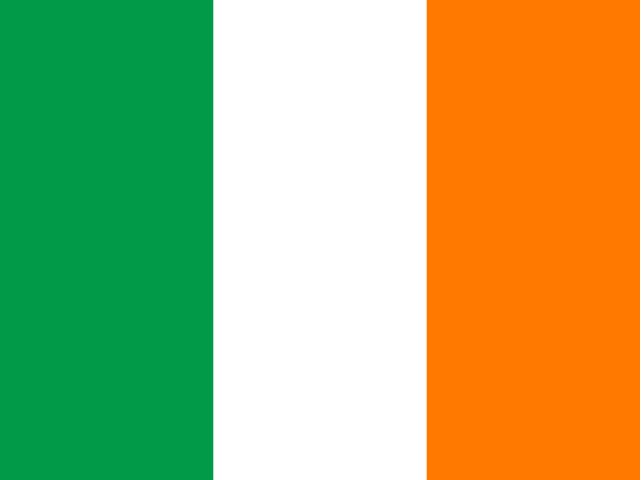
Ireland
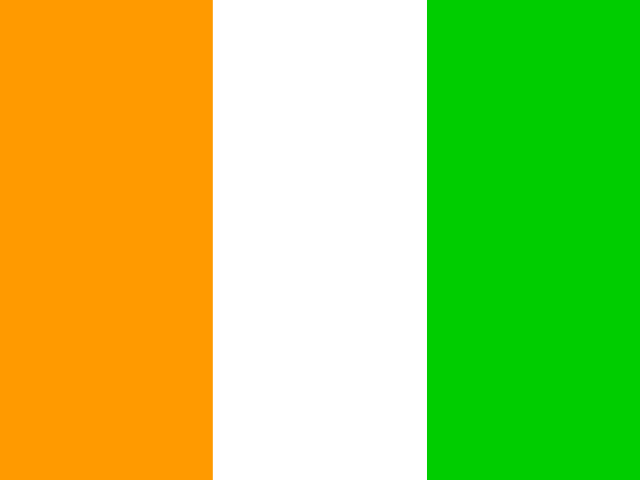
Cote d'Ivoire
These two are true mirror images: Ireland's stripes run green, white, orange; Cote d'Ivoire's run the exact reverse, orange, white, green. Both were modelled on the French tricolour, adopted decades apart for unrelated reasons. Ireland's 1848 flag is a peace banner between the green of Irish nationalism and the orange of the Protestant, William of Orange tradition. Cote d'Ivoire's flag, adopted in 1959 on the eve of independence, reads geographically: orange for the northern savanna, white for its rivers, green for the southern forest. Ireland's ratio is also a longer 1:2 against Cote d'Ivoire's 2:3.
Norway vs Iceland
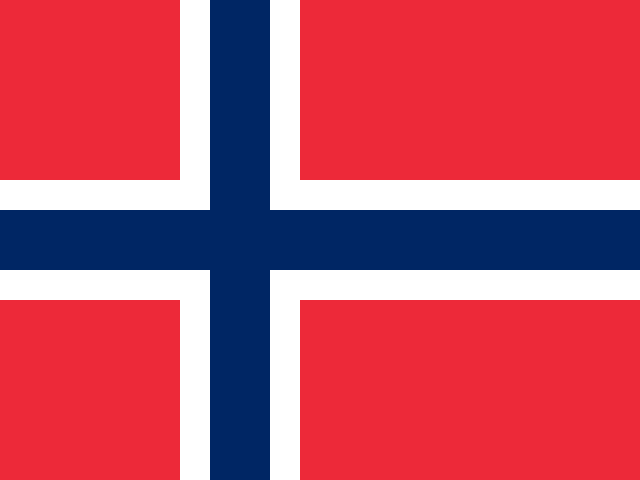
Norway
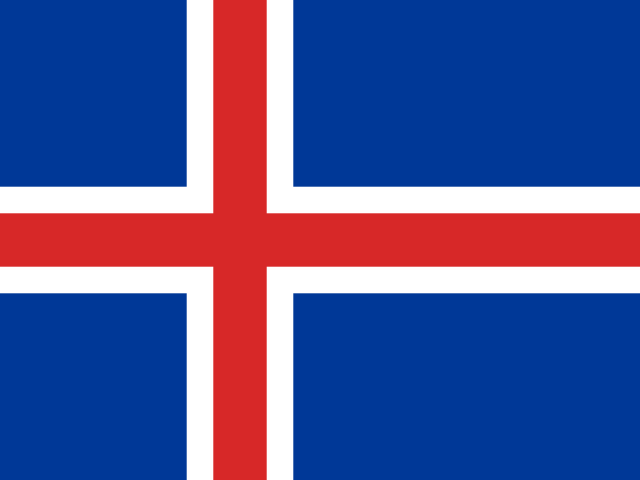
Iceland
Both fly a Nordic cross, the offset cross every Scandinavian flag shares, and the two are colour inverted: Norway is red with a blue, white bordered cross; Iceland is blue with a red, white bordered cross. Norway's 1821 flag combined Denmark's red and white with Sweden's blue after their union ended. Iceland, under the Danish crown until 1944, adopted the same cross with reversed colours in 1915, read locally as the red of volcanic fire, the white of ice and snow, and the blue of the mountains and the sea.
Australia vs New Zealand
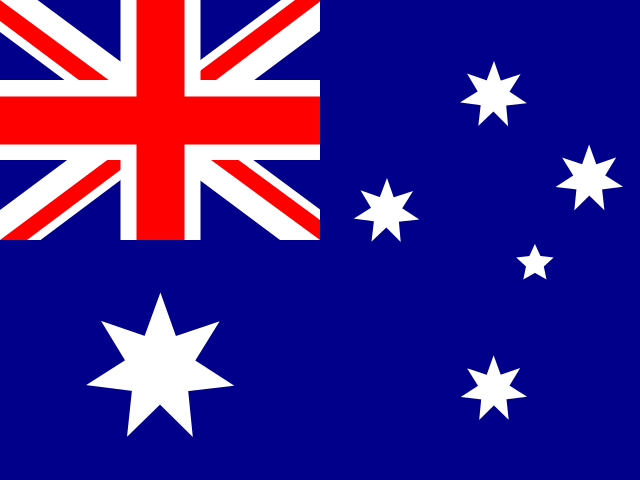
Australia
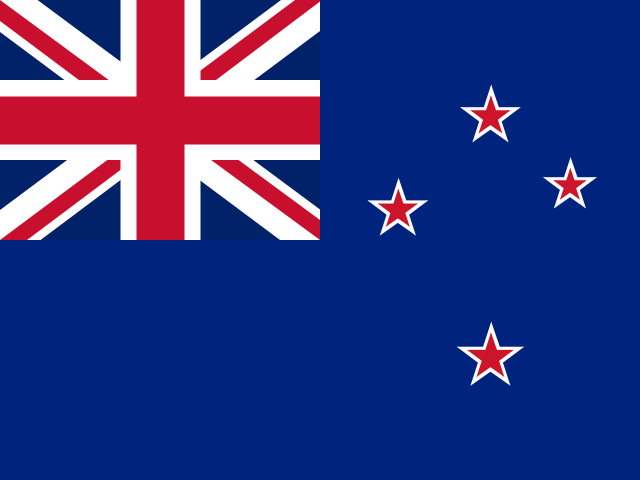
New Zealand
Both are a blue field with the Union Jack in the canton and the Southern Cross picked out in stars, since both nations chose the same constellation to mark their place in the southern sky. New Zealand's cross is four red, white bordered stars, drawn in three slightly different sizes. Australia's carries six white stars: five make up its Southern Cross, plus a separate, larger Commonwealth Star beneath the Union Jack representing the federation of states, which New Zealand's flag does not have.
Slovenia vs Slovakia vs Russia
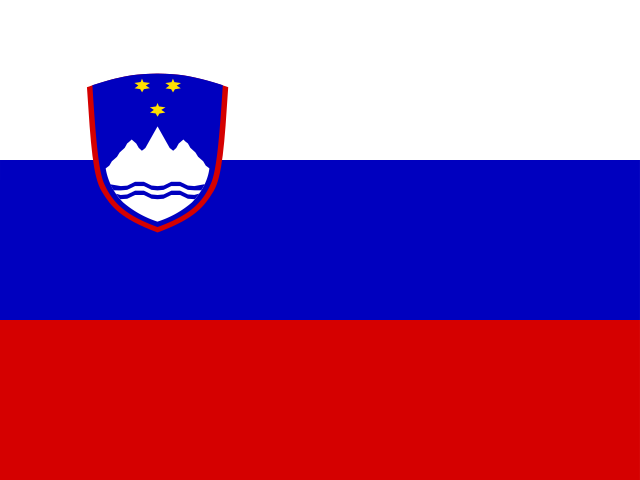
Slovenia
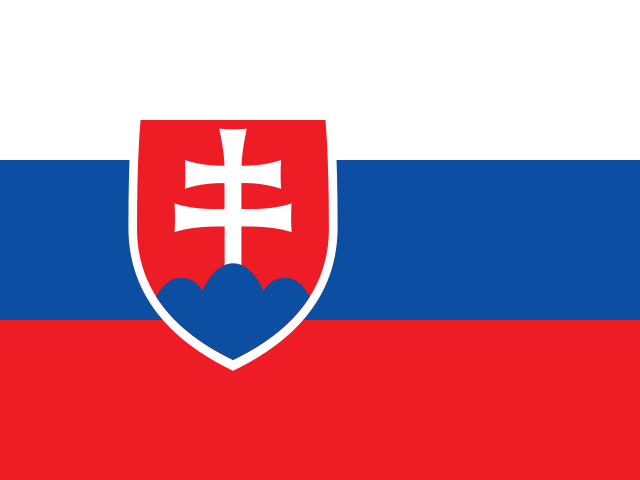
Slovakia
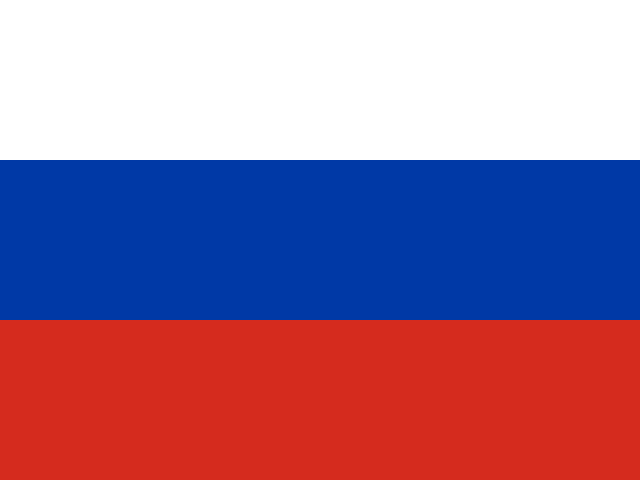
Russia
All three fly white, blue and red stripes in the same order, a palette that became a symbol of 19th century Pan-Slavic unity, borrowed from the Russian imperial tricolour. Russia's flag carries no emblem. Slovenia and Slovakia each add their own coat of arms near the hoist, specifically to distinguish themselves from Russia and from each other: Slovenia's sits high and overlaps only the white and blue stripes, while Slovakia's is vertically centred and crosses all three. Proportions differ too: Russia and Slovakia 2:3, Slovenia the more elongated 1:2.
Venezuela vs Colombia vs Ecuador
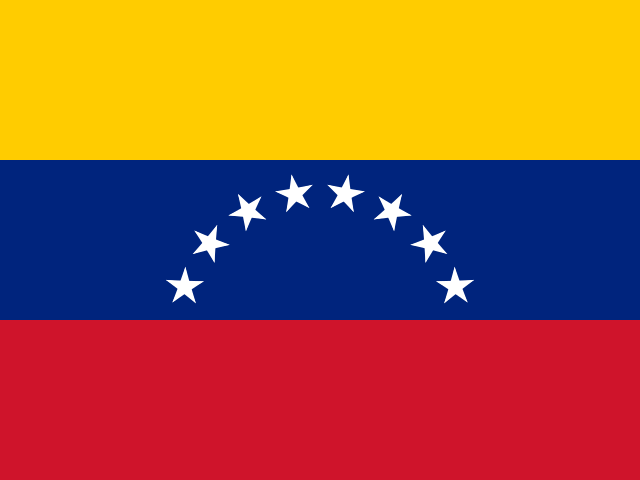
Venezuela
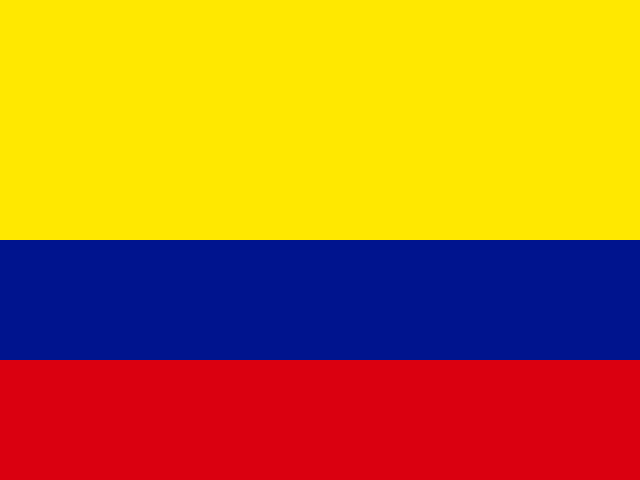
Colombia
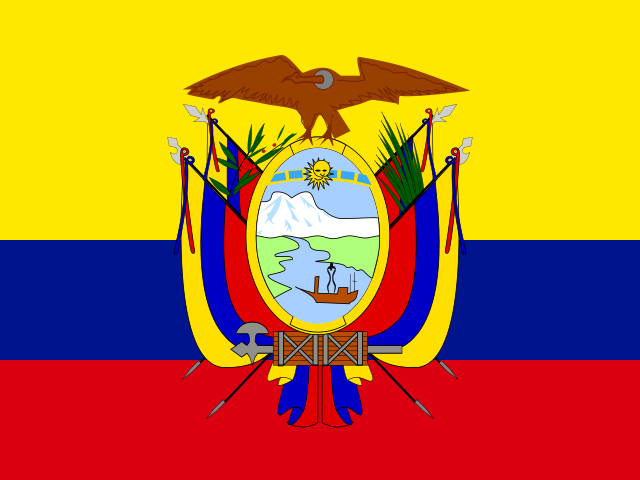
Ecuador
All three descend from the yellow, blue and red flag designed by Francisco de Miranda and flown by Gran Colombia, the republic that briefly united them under Simon Bolivar from 1819 to 1831. When it split apart, each state kept the tricolour with its own changes. Colombia keeps it plainest: a double width yellow band over equal blue and red, no emblem. Ecuador adds its coat of arms, with Mount Chimborazo and a condor, at the centre. Venezuela redraws the stripes as three equal bands and adds an arc of eight stars; the state flag also carries the national arms in the upper hoist, though the everyday civil flag shown here does not.
Senegal vs Mali vs Guinea
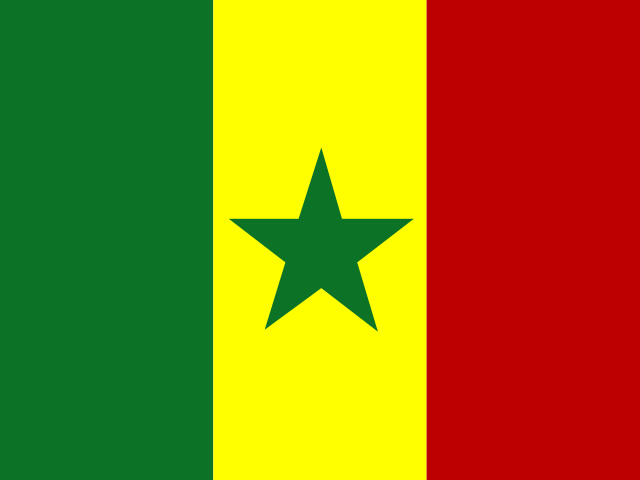
Senegal
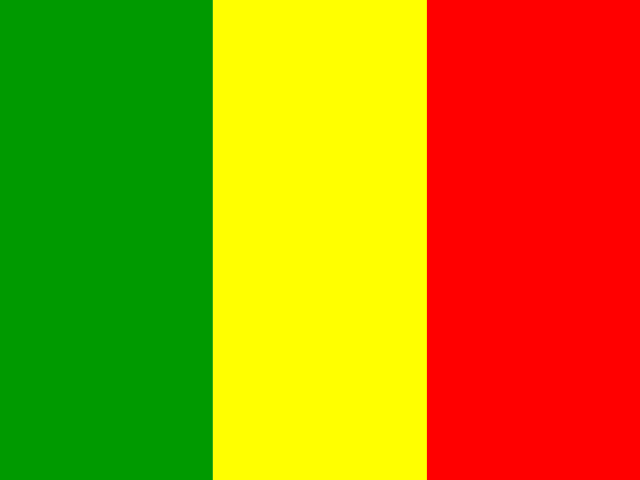
Mali
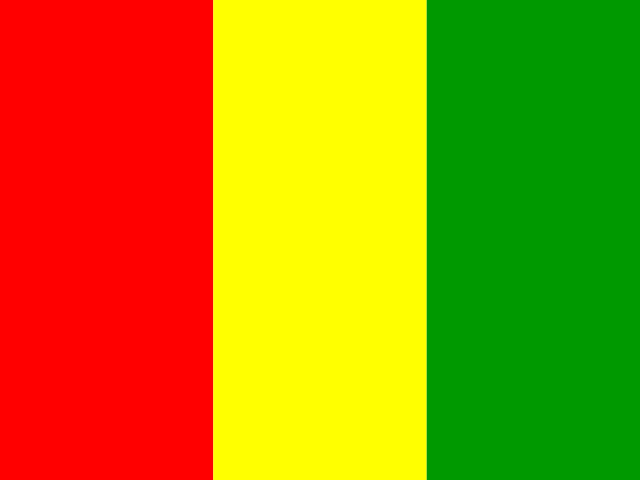
Guinea
Green, yellow and red are the Pan-African colours, borrowed from Ethiopia's flag, one of the few African nations never colonised, and adopted by newly independent West African states around 1960 as a deliberate sign of shared identity. Senegal and Mali fly identical green, yellow, red vertical stripes; the only difference is a small green star centred on Senegal's yellow band, a leftover from when the two briefly federated in 1959 and 1960. Guinea, independent in 1958, flies the same colours with the stripe order reversed: red, yellow, green.
Qatar vs Bahrain
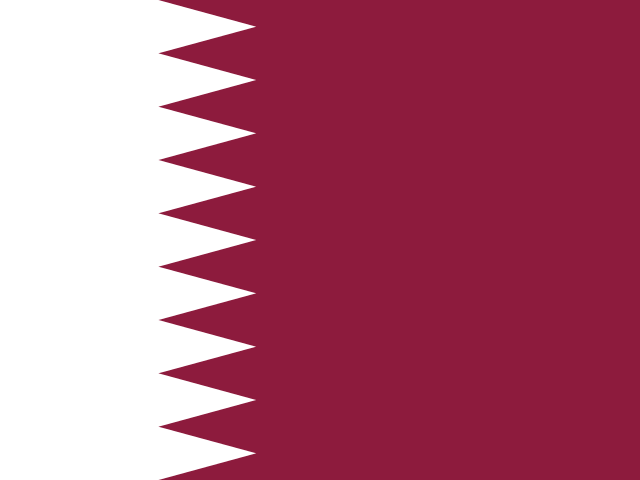
Qatar
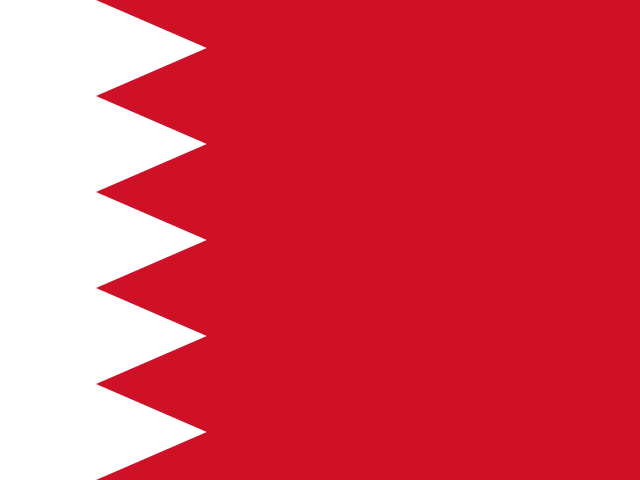
Bahrain
Both Gulf neighbours fly a white band against a darker colour split by a serrated, zigzag edge, a design no other flag uses. Qatar's field is maroon with nine serrated points, marking Qatar as the ninth of the Gulf's reconciled emirates to sign a treaty with Britain, in 1916. Bahrain's field is a brighter red with five points, for the Five Pillars of Islam. Qatar's flag is also unusually elongated, at 11:28, the only national flag more than twice as wide as tall.
Jordan vs Palestine
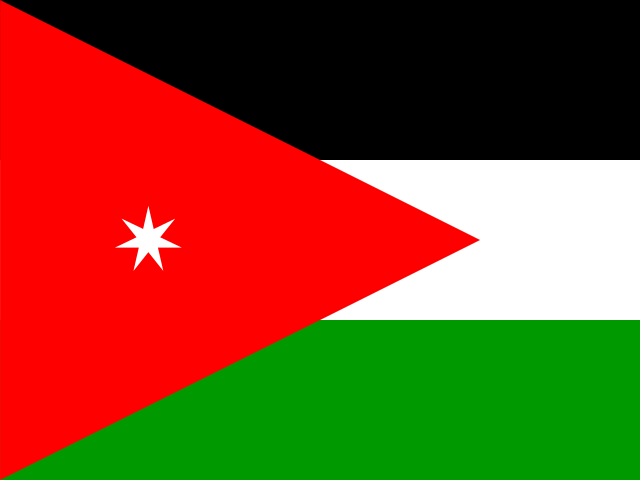
Jordan
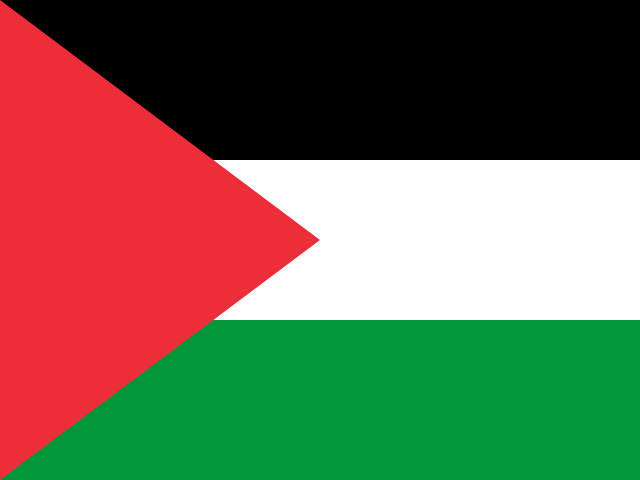
Palestine
Both flags descend from the black, white and green bands and red hoist triangle of the 1916 Arab Revolt flag, representing the same lineage: black for the Abbasid dynasty, white for the Umayyad, green for the Fatimid or Rashidun, red for the Hashemites who led the revolt. Jordan's 1928 version adds a white seven pointed star inside the red triangle, for unity among Arab peoples and the Quran's opening seven verses. Palestine's flag has no star, and its red triangle is drawn shorter.
Andorra vs Moldova
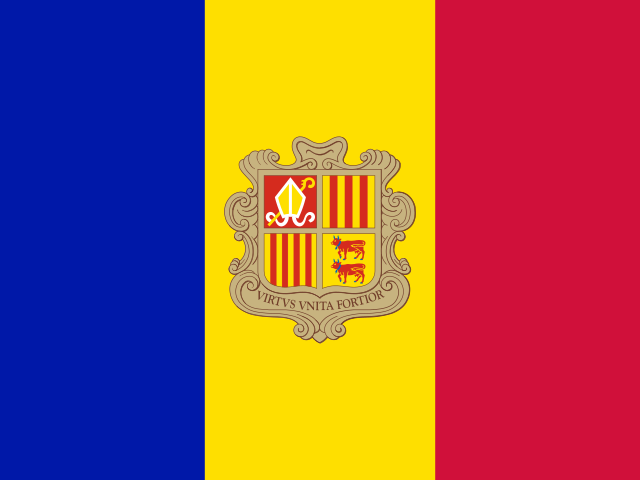
Andorra
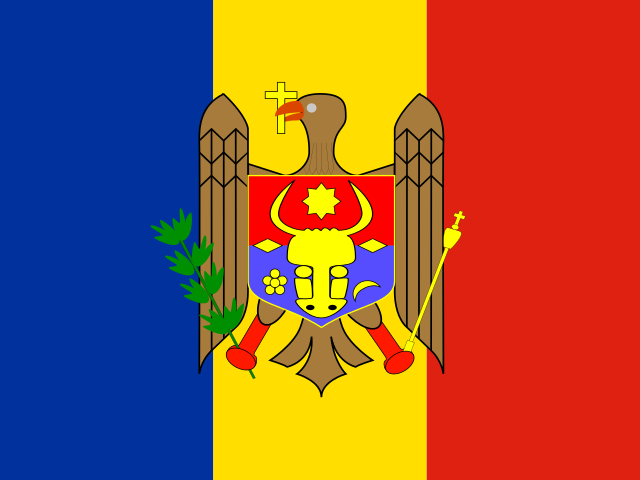
Moldova
Both fly a blue, yellow and red vertical tricolour with a coat of arms centred on the yellow band, easy to mix up at a glance. The arms tell them apart. Andorra's shield quarters the arms of the Bishop of Urgell and the Count of Foix, its historical co-princes, with the emblems of Catalonia and Bearn. Moldova's shows an eagle holding a shield with an aurochs head, a rose, a crescent and a star. Andorra's tricolour was standardised in 1993, on joining the United Nations; Moldova's dates to 1990, just before independence from the Soviet Union.
Egypt, Iraq and Yemen: the Arab Liberation colours
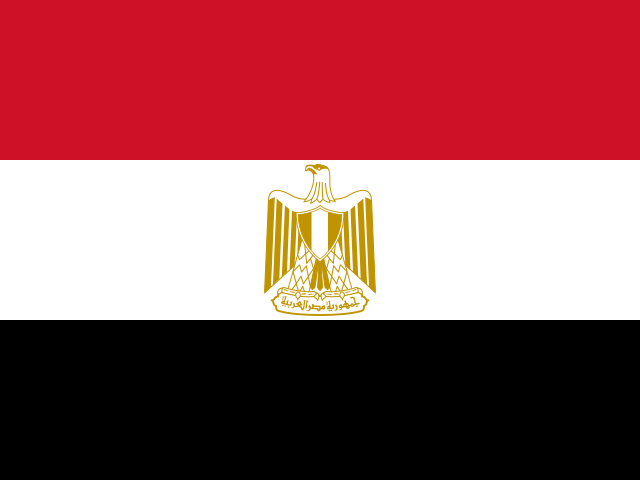
Egypt
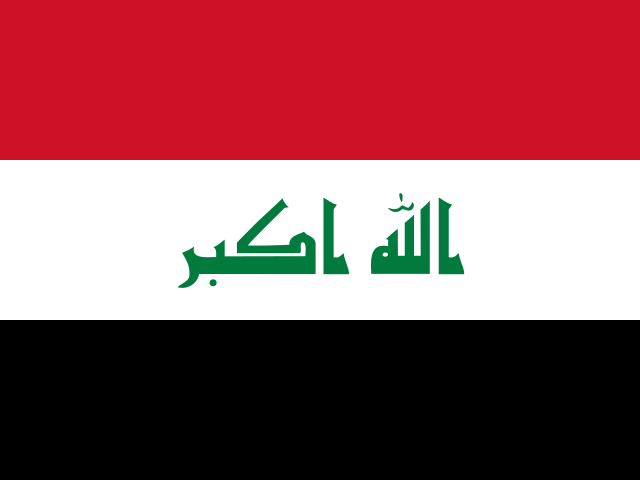
Iraq
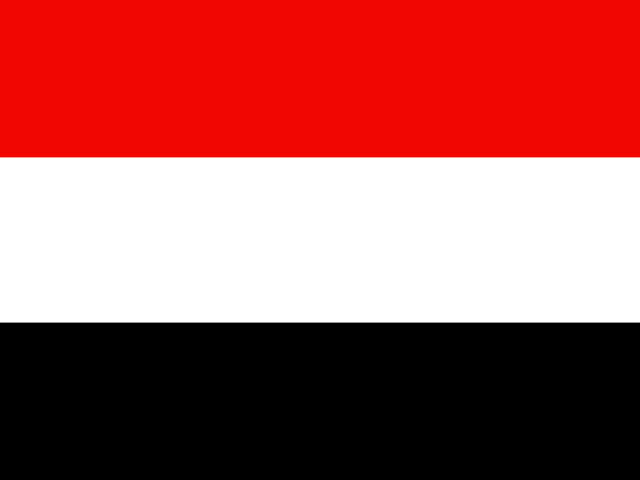
Yemen
Red, white and black bands, the Arab Liberation colours, were adopted by Egypt after its 1952 revolution and spread to Iraq in 1963 and to unified Yemen in 1990. Each marks the bands differently: Egypt centres the golden Eagle of Saladin on the white stripe, Iraq writes the takbir, "God is greatest," in green Kufic script, and Yemen adds no emblem. Syria shared this flag from 1980 until its government changed in December 2024; its current flag, raised by the new government in December 2024 and made official by the constitutional declaration of 13 March 2025, is the older green, white and black independence design with three red stars.
Reading the differences is one skill and recalling them cold is another. The flag quiz shows one flag at a time and asks for the country, which is where these pairs stop being obvious.
Quick facts
- Romania and Chad differ only in the shade of blue in their vertical tricolours; a 2004 complaint by Chad to the United Nations changed nothing.
- Indonesia and Monaco share the same red over white design but use different flag ratios, 2:3 against 4:5.
- Ireland and Cote d'Ivoire fly the exact same three colours in mirror reversed order.
- Slovenia and Slovakia each add a national coat of arms to the plain Russian tricolour pattern to tell all three apart.