The 22 members of the Arab League
Arabic is official or co-official in all 22 members of the Arab League, from Morocco in the west to Oman in the east. Most are concentrated in the Middle East and North Africa, but three, Somalia, Djibouti, and Comoros, sit in the Horn of Africa and East Africa, where Arabic is a language of religion and government rather than the language most residents actually grow up speaking at home.
| Country | Continent | Status |
|---|---|---|
 Algeria Algeria | Africa | Sole official language, alongside Berber |
 Bahrain Bahrain | Asia | Sole official language |
 Comoros Comoros | Africa | Co-official with Comorian and French; Arabic mainly liturgical |
 Djibouti Djibouti | Africa | Co-official with French; Somali and Afar spoken at home |
 Egypt Egypt | Africa | Sole official language, most Arabic speakers of any country |
 Iraq Iraq | Asia | Co-official with Kurdish |
 Jordan Jordan | Asia | Sole official language |
 Kuwait Kuwait | Asia | Sole official language |
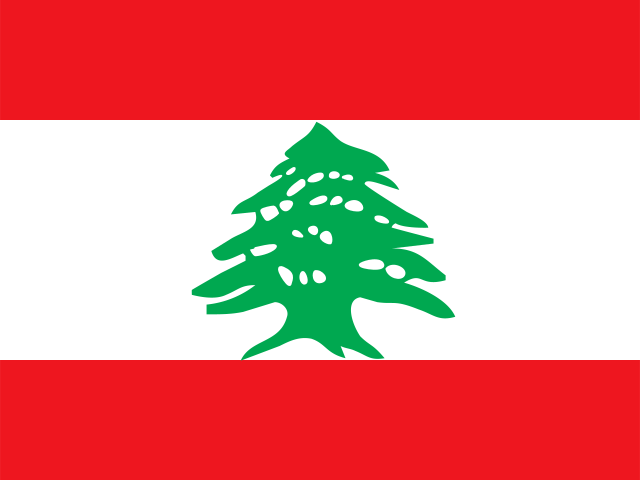 Lebanon Lebanon | Asia | Sole official language |
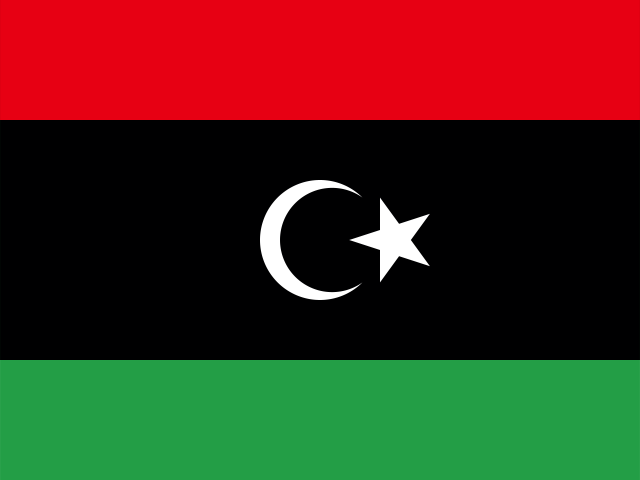 Libya Libya | Africa | Sole official language |
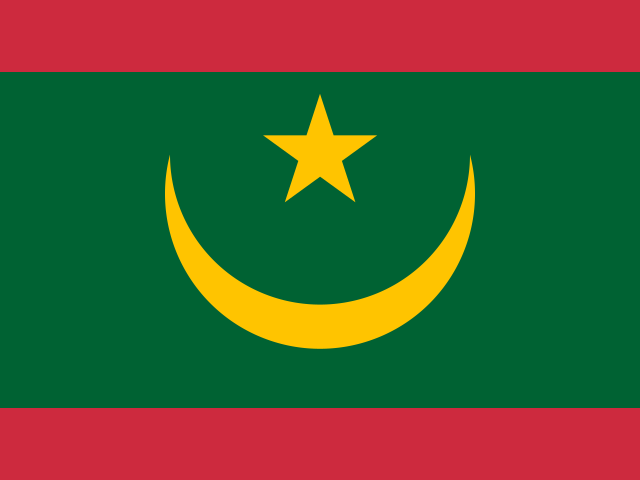 Mauritania Mauritania | Africa | Sole official language |
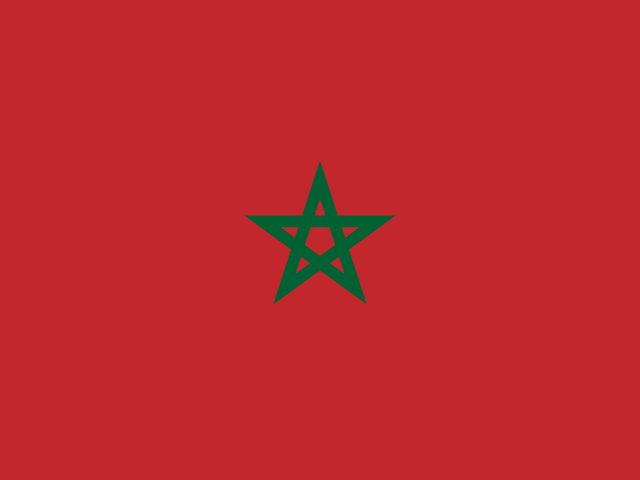 Morocco Morocco | Africa | Co-official with Berber |
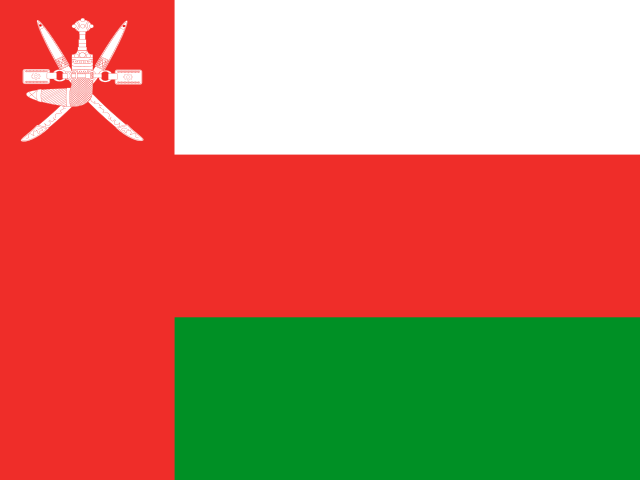 Oman Oman | Asia | Sole official language |
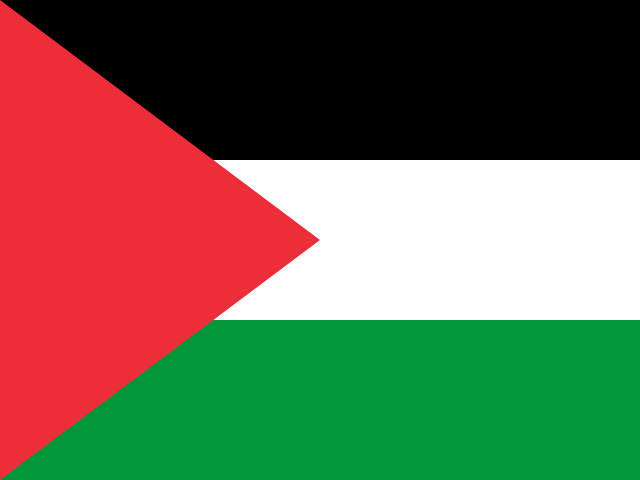 Palestine Palestine | Asia | Sole official language (UN observer state) |
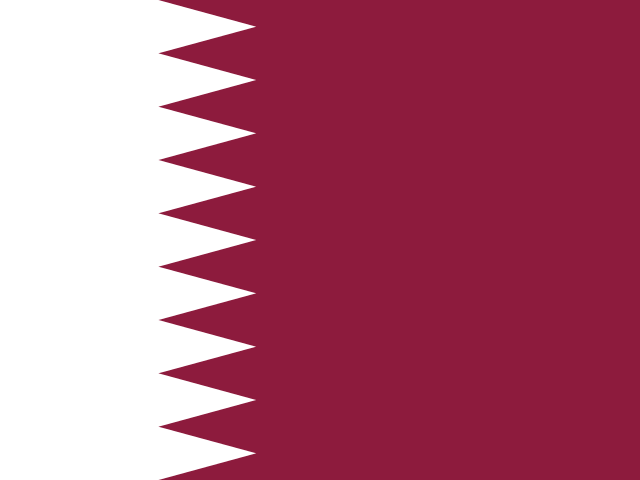 Qatar Qatar | Asia | Sole official language |
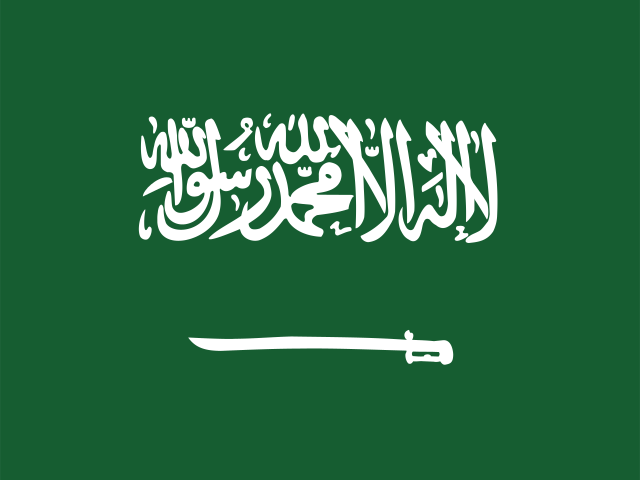 Saudi Arabia Saudi Arabia | Asia | Sole official language, home to Mecca and Medina |
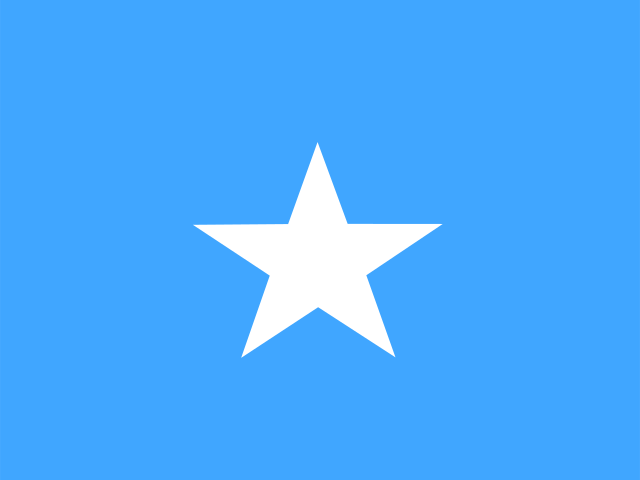 Somalia Somalia | Africa | Named in the constitution as the second language after Somali; Somali spoken at home |
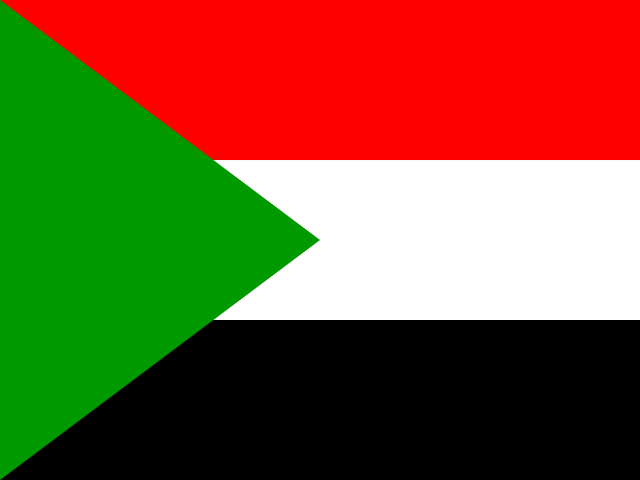 Sudan Sudan | Africa | Co-official with English |
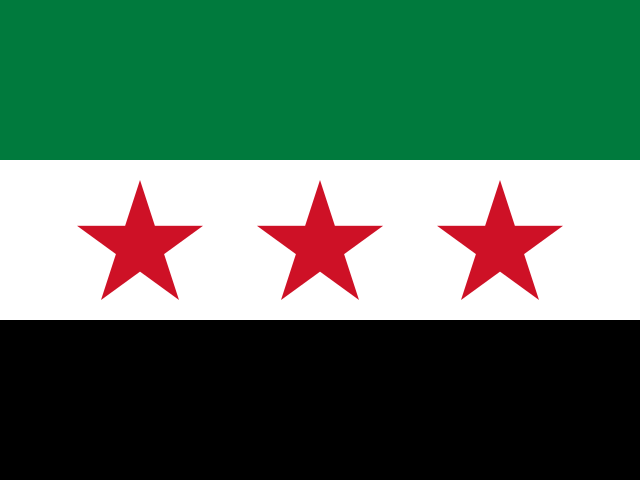 Syria Syria | Asia | Sole official language |
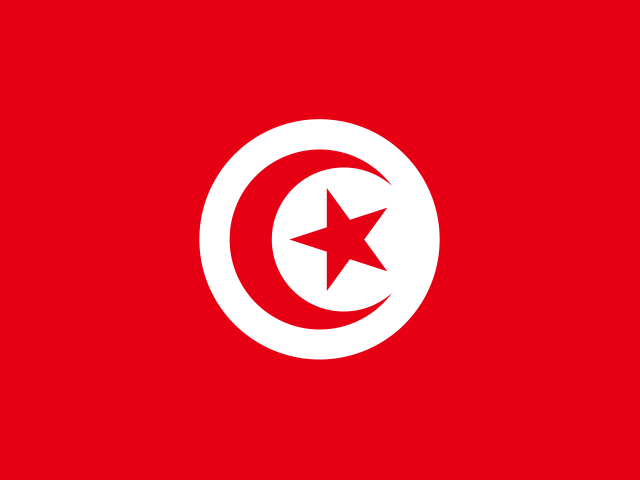 Tunisia Tunisia | Africa | Sole official language |
 United Arab Emirates United Arab Emirates | Asia | Sole official language |
 Yemen Yemen | Asia | Sole official language |
Three members where Arabic is official but not the mother tongue
Somalia, Djibouti, and Comoros are full members of the Arab League and list Arabic as an official language, but in daily life it plays a smaller role than in the League's Middle Eastern and North African core. In Somalia, Somali is the sole language named in the constitution as the country's mother tongue and Arabic carries semi-official status learned mainly through religious education. In Djibouti, most residents speak Somali or Afar at home, with only a small population fluent in colloquial Arabic day to day, even though Arabic and French are both official. Comoros follows the same pattern: around 90 percent of the population speaks Comorian, a Bantu language related to Swahili, at home, with Arabic reserved mainly for religious and formal contexts. Mauritania and Sudan sit somewhere in between, since Arabic is genuinely the majority home language in large parts of each country but coexists there with many other native tongues.
Syria's status and Israel's changed relationship with Arabic
Syria's Arab League membership was suspended in November 2011 as the civil war escalated, and it was formally reinstated at a Cairo meeting of the League's Council on 7 May 2023. As of today, Syria appears as an active member on the Arab League's own current list, even after the fall of the Assad government in December 2024 and the transition to a new administration in Damascus. Separately, Israel, though never an Arab League member, changed Arabic's own legal status inside its borders: the Basic Law "Israel as the Nation-State of the Jewish People," passed on 19 July 2018, downgraded Arabic from an official language, a status it had held since the British Mandate era, to a language with unspecified "special status" in state institutions.
Modern Standard Arabic versus the Arabic people actually speak
Every country on this list teaches and broadcasts in Modern Standard Arabic, the descendant of Classical Arabic used in the Quran, in news, formal writing, and official documents. Almost nobody, though, grows up speaking it as a first language. Children instead learn a regional dialect at home, Egyptian, Levantine, Gulf, or Maghrebi among the largest groups, and pick up Modern Standard Arabic later through school. The gap between dialects can be wide: an Arabic speaker from Morocco and one from Iraq may struggle to follow each other's everyday speech, even though both can read the same newspaper front page written in Modern Standard Arabic. Linguists disagree on whether to call the more distant dialects separate languages or varieties of one, precisely because the written standard papers over spoken differences large enough to cause real confusion.
Quick facts
- Arabic is official or co-official in all 22 Arab League member states.
- Egypt has the largest number of Arabic speakers of any single country.
- Somalia, Djibouti, and Comoros are Arab League members where Arabic is official but not most people's home language.
- Syria's membership, suspended in 2011, was reinstated in May 2023 and remains active today.
- Israel downgraded Arabic from an official language to a "special status" language under a 2018 Basic Law.
- Modern Standard Arabic is the shared written and broadcast standard, but almost no one speaks it as a native first language at home.