The 26 countries where French is official
The counting rule for this page: a sovereign state is on the list when French is named as an official or co-official language in that country's constitution or law, so de jure status, not everyday use. That rule gives 26. It excludes countries where French is widely used in administration or schooling without legal status, Algeria being the largest, and it excludes the ten non sovereign territories where French is official, which is why some lists reach 36. It also explains why the older figure of 29 is still quoted: Mali, Burkina Faso, and Niger each demoted French from official language to a working language, Mali in its constitution of 22 July 2023, Burkina Faso in a constitutional revision in December 2023, and Niger under the Charte de la refondation in April 2025. Those three are no longer counted here.
Twenty of the twenty six are in Africa, the result of France's and Belgium's colonial empires there, and most of the rest are in Europe, where French sits alongside other languages in Belgium, Luxembourg, and Switzerland. Only Canada, Haiti, and the Pacific nation of Vanuatu carry French official status outside Europe and Africa.
| Country | Continent | Status |
|---|---|---|
 France France | Europe | Sole official language |
 Belgium Belgium | Europe | Co-official with Dutch and German |
 Luxembourg Luxembourg | Europe | Co-official with Luxembourgish and German |
 Switzerland Switzerland | Europe | Co-official with German, Italian, and Romansh |
 Monaco Monaco | Europe | Sole official language |
 Canada Canada | North America | Co-official with English |
 Haiti Haiti | North America | Co-official with Haitian Creole |
 Benin Benin | Africa | Sole official language |
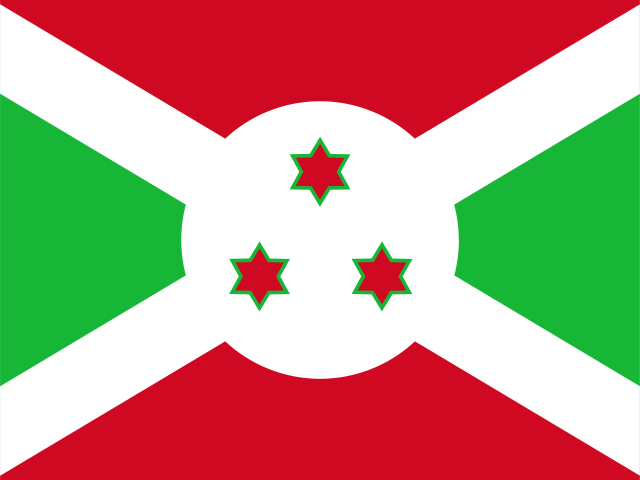 Burundi Burundi | Africa | Co-official with Kirundi and English |
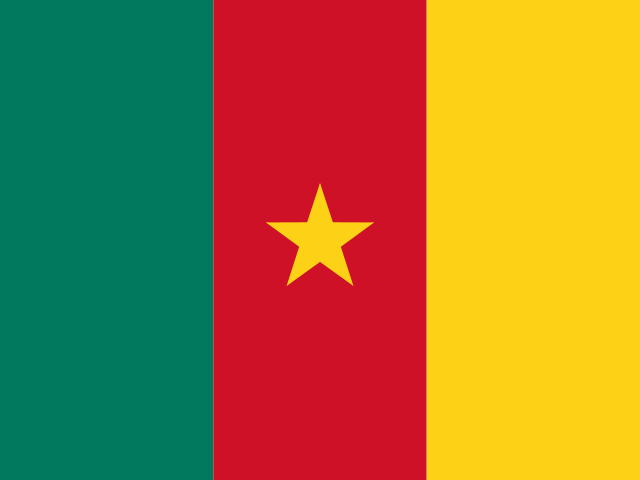 Cameroon Cameroon | Africa | Co-official with English |
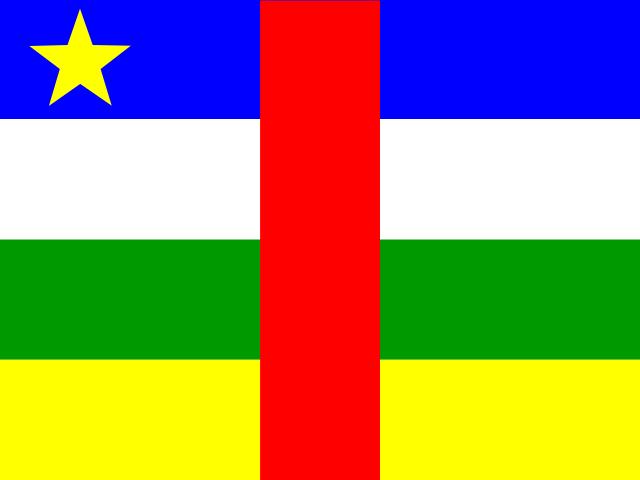 Central African Republic Central African Republic | Africa | Co-official with Sango |
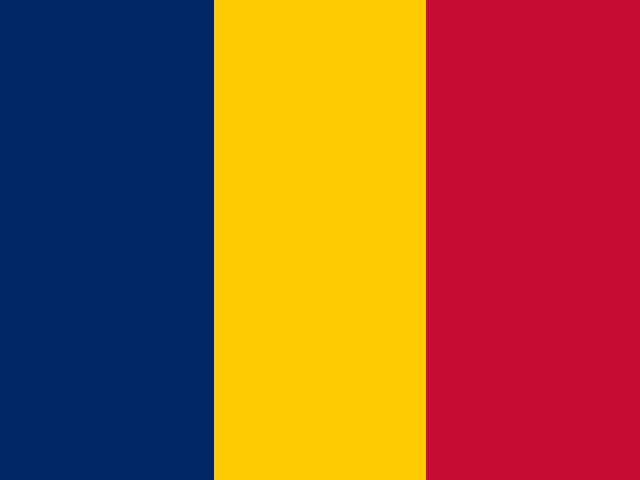 Chad Chad | Africa | Co-official with Arabic |
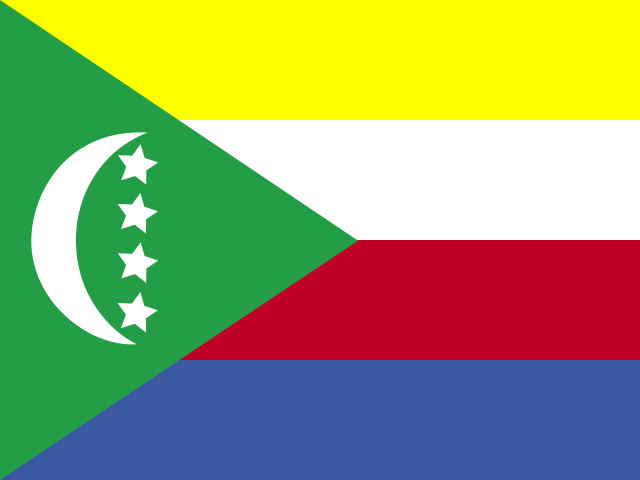 Comoros Comoros | Africa | Co-official with Comorian and Arabic |
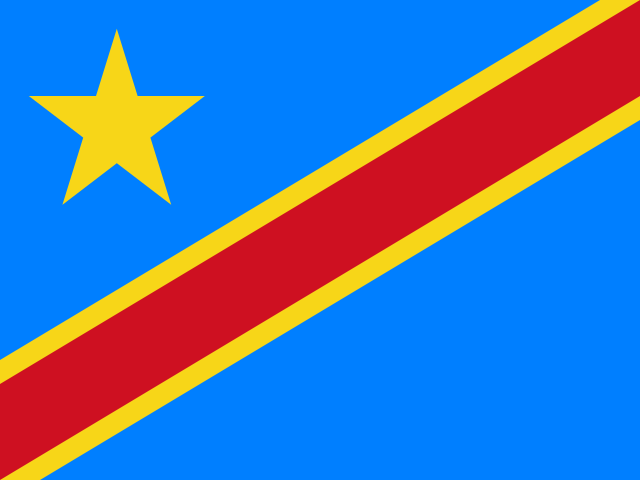 Democratic Republic of the Congo Democratic Republic of the Congo | Africa | Sole official language, most French speakers of any country |
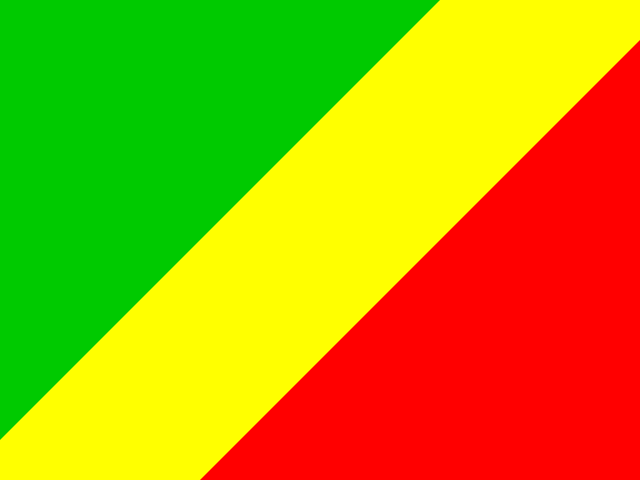 Republic of the Congo Republic of the Congo | Africa | Sole official language |
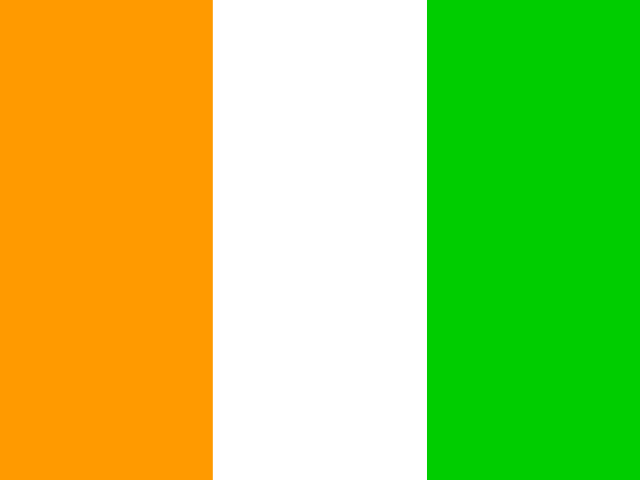 Côte d'Ivoire Côte d'Ivoire | Africa | Sole official language |
 Djibouti Djibouti | Africa | Co-official with Arabic |
 Equatorial Guinea Equatorial Guinea | Africa | Co-official with Spanish and Portuguese |
 Gabon Gabon | Africa | Sole official language |
 Guinea Guinea | Africa | Sole official language |
 Madagascar Madagascar | Africa | Co-official with Malagasy |
 Rwanda Rwanda | Africa | Co-official with Kinyarwanda and English |
 Senegal Senegal | Africa | Sole official language |
 Seychelles Seychelles | Africa | Co-official with English and Seychellois Creole |
 Togo Togo | Africa | Sole official language |
 Vanuatu Vanuatu | Oceania | Co-official with English and Bislama |
Official language versus OIF membership, two different lists
It is easy to conflate this list with membership of the Organisation internationale de la Francophonie, the OIF, the international body that promotes French language and culture worldwide. The OIF is far larger: it counts around 90 member states, governments, and observers in total, among them countries like Ghana, Qatar, and Serbia, where French holds no official status at all and is spoken by only a small minority. OIF membership is a statement of cultural or economic alignment with the Francophone world. Official language status, the subject of this page, is a legal fact written into a country's constitution or laws. The two lists overlap heavily but are not the same thing, and a country can join one without qualifying for the other.
Africa, not France, is where French is growing
The Democratic Republic of the Congo has more French speakers than any other country in the world, including France itself, a fact that surprises most people the first time they hear it. Kinshasa, its capital, is regularly cited as the largest majority French speaking city on Earth by population, with an estimated 17 to 18 million residents, even though Lingala remains the language most people there actually speak day to day. The Organisation internationale de la Francophonie's own projections put future growth almost entirely in Africa: forecasts built on current birth rates and school enrollment suggest French speakers worldwide could reach 700 million or more by 2050, with roughly nine in every ten of them living in Africa. That would flip the language's center of gravity permanently away from Europe, where the number of French speakers is comparatively flat.
How many people speak French today
The OIF's La langue francaise dans le monde, published every four years and most recently in 2026, counts 396 million French speakers worldwide, plus about 170 million people learning the language or being taught in it. That is up from the 321 million the 2022 edition reported, which is the figure still circulating in most older articles. The range across sources is wide, roughly 320 million to just under 400 million, because it depends on whether the count includes only fluent daily users or also partial and second language speakers, and because French is spreading fastest in places, like DR Congo and the Sahel, where school enrollment and population growth are both climbing quickly and old census data ages out fast.
Quick facts
- Twenty six countries hold French as an official or co-official language, twenty of them in Africa.
- The Democratic Republic of the Congo has more French speakers than any other country, including France.
- Kinshasa, DR Congo's capital, is often cited as the largest majority French speaking city in the world by population.
- OIF membership, at around 90 states and governments, is much broader than the 26 countries where French is actually official.
- Most future growth in French speakers is projected to happen in Africa, not Europe.