The nine member states of the CPLP
The Community of Portuguese Language Countries, known by its Portuguese initials CPLP, is the intergovernmental body that formally groups the world's Portuguese speaking states. Its nine full members are Portugal, Brazil, Angola, Mozambique, Cabo Verde, Guinea-Bissau, Sao Tome and Principe, Timor-Leste, and Equatorial Guinea, the last of which joined in 2014. In Equatorial Guinea, Portuguese sits alongside Spanish and French as an official language, but Spanish remains the language most people actually speak day to day, which is why geographers sometimes flag it as the exception on this list rather than a true Portuguese speaking nation.
These nine countries span four continents: Europe, South America, Africa, where six of the nine sit, and Southeast Asia. That spread is unusual for a language spoken natively by a relatively small population in its country of origin, and it is the reason Portuguese ranks among the most widely spoken languages on Earth despite Portugal itself having only about 11.4 million people.
Where Portuguese is spoken, country by country
| Country | Continent | Status | Approx. speakers |
|---|---|---|---|
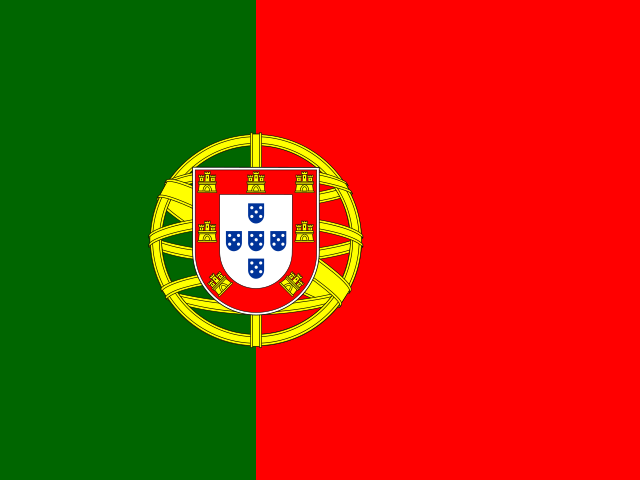 Portugal Portugal |
Europe | Sole official language | About 11.4 million |
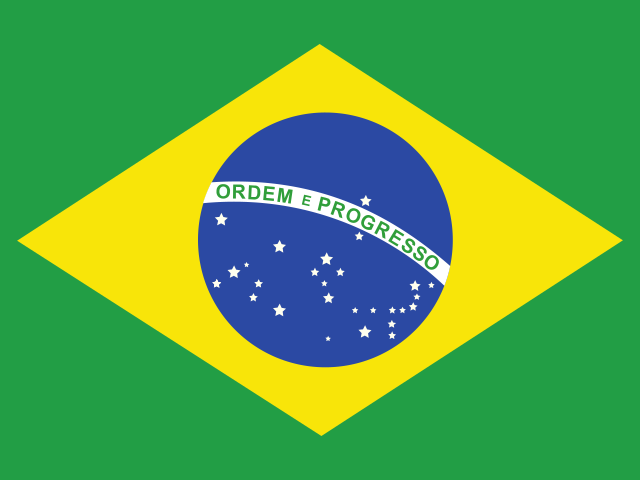 Brazil Brazil |
South America | Sole official language | 200+ million |
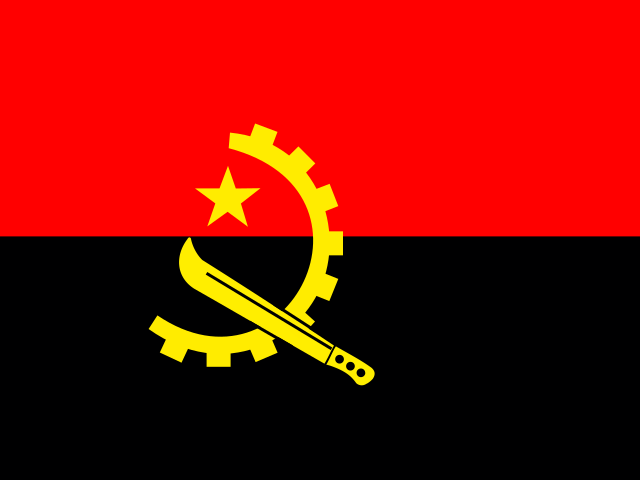 Angola Angola |
Africa | Sole official language | ~71% speak it at home (2014 census) |
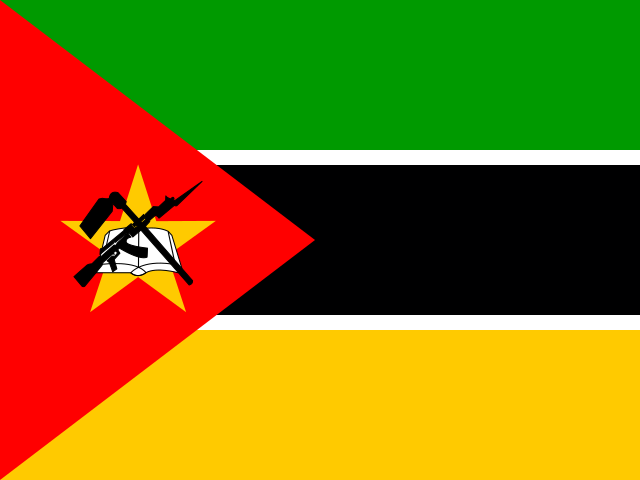 Mozambique Mozambique |
Africa | Sole official language | ~17% native, ~47% speakers (2017 census) |
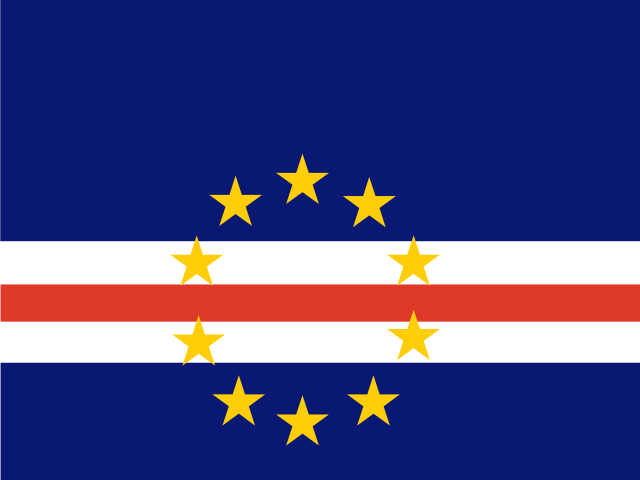 Cabo Verde Cabo Verde |
Africa | Sole official language | Nearly all, bilingual with Creole |
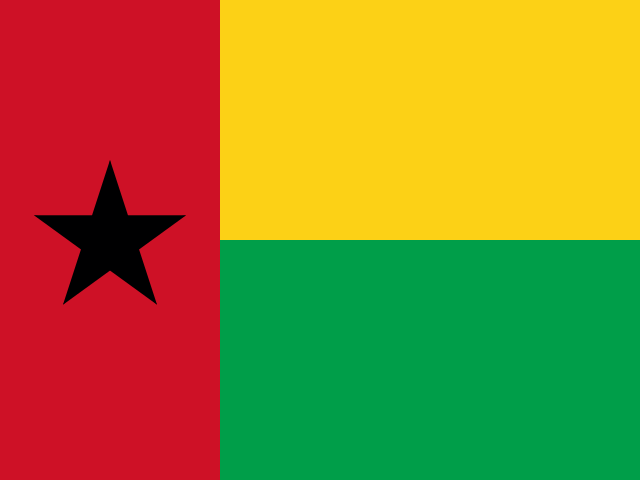 Guinea-Bissau Guinea-Bissau |
Africa | Sole official language | ~2% native, ~28% speakers (2009 census) |
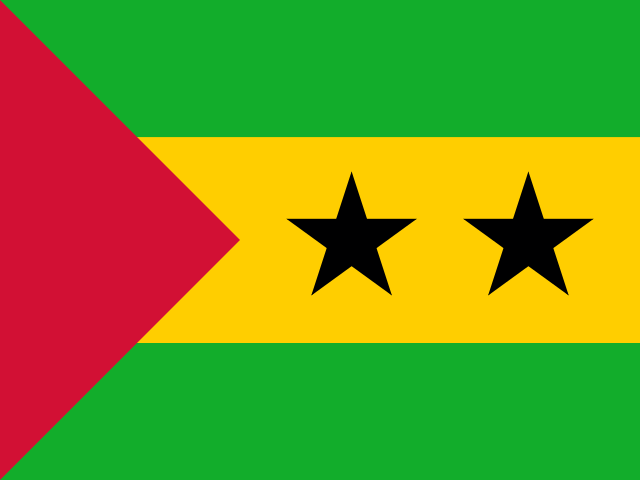 Sao Tome and Principe Sao Tome and Principe |
Africa | Sole official language | ~98% speak it (2012 census) |
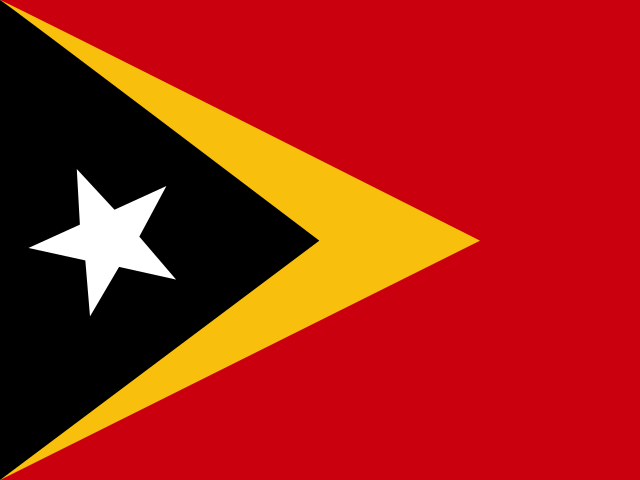 Timor-Leste Timor-Leste |
Asia | Co-official with Tetum | ~61% report some proficiency; fluency far lower |
 Equatorial Guinea Equatorial Guinea |
Africa | Co-official, minority use | Small minority |
| Macau | Asia | Co-official with Chinese (not a country) | A small minority, and falling |
Speaker figures vary by source, since census questions on language differ from country to country and Ethnologue's own estimates carry a range. Worldwide, most tallies put total Portuguese speakers, native plus second language, at roughly 260 to 280 million people, with Brazil alone accounting for around 200 million of that total. Macau is not a country. It is a special administrative region of China where Portuguese remains co-official with Chinese for historical reasons, a holdover from over four centuries of Portuguese administration that ended in 1999, though fluency there is now a small and shrinking minority.
Why one small European country left such a large footprint
Portugal was a pioneer of the Age of Exploration in the fifteenth and sixteenth centuries, and its ships reached the coasts of West Africa, Brazil, and Asia decades before most European rivals. Trading posts turned into colonies, and colonies eventually turned into independent nations that kept Portuguese as an official language long after Portuguese rule ended, much as former British and French colonies kept English and French. Brazil, colonized from 1500, became by far the largest Portuguese speaking country in the world, while the African territories of Angola, Mozambique, Guinea-Bissau, Cabo Verde, and Sao Tome and Principe gained independence in the mid 1970s and built their own national identities around the shared language. Timor-Leste is the outlier: a Portuguese colony until 1975, then annexed by Indonesia until it voted for independence in 1999, restoring Portuguese as an official language alongside Tetum.
European Portuguese versus Brazilian Portuguese
The two major varieties diverged enough over five centuries that speakers of one sometimes need a moment to adjust to the other, though they remain mutually intelligible. European Portuguese tends to close and reduce its vowels, giving it a quicker, more consonant heavy sound, while Brazilian Portuguese keeps vowels more open and nasal. Everyday vocabulary differs too: a train is a comboio in Portugal and a trem in Brazil. Forms of address diverge as well, with Brazilian Portuguese leaning on voce for most situations while European Portuguese preserves a wider set of formal options. None of this stops a Lisbon news broadcast from being understood in Rio, or the reverse.
Quick facts
- Nine countries hold Portuguese as an official language through the CPLP: Portugal, Brazil, Angola, Mozambique, Cabo Verde, Guinea-Bissau, Sao Tome and Principe, Timor-Leste, and Equatorial Guinea.
- Macau, a Chinese special administrative region, keeps Portuguese co-official with Chinese, though it is not a country.
- Brazil accounts for roughly 200 million of the world's estimated 260 to 280 million Portuguese speakers.
- Six of the nine CPLP states are in Africa: Angola, Mozambique, Cabo Verde, Guinea-Bissau, Sao Tome and Principe, and Equatorial Guinea.
- Portugal's Age of Exploration in the 1400s and 1500s is the reason a language native to about 11 million people is spoken by hundreds of millions today.