Australia is a country in Oceania, with about 27.6 million people (2025) and an area of 7,741,220 square kilometres. Its capital is Canberra, and it has no land borders.
By Team Geography·Last reviewed
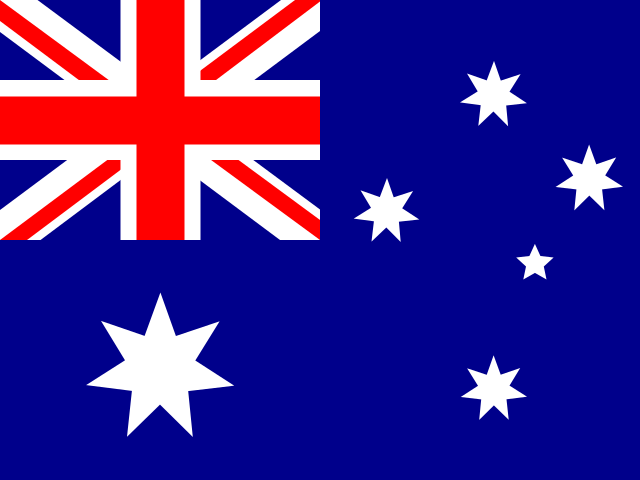
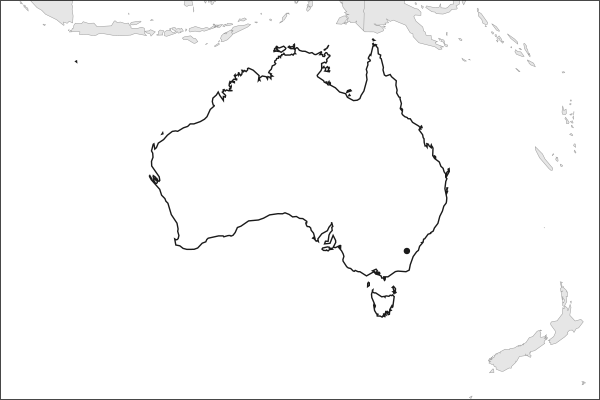
Flag of AustraliaAustralia in solid, land neighbours outlined, capital marked.
7,741,220 km² (2,988,901 sq mi) World Bank, surface area. 6th largest of 195.
Population density
3.6 people per km²
Land neighbours
None. It has no land borders with another country.
Official name
Commonwealth of Australia
UN status
Member state
Capital coordinates
35.28° S, 149.13° E Canberra, Natural Earth.
No land borders
Australia shares no land border with another country. Its nearest neighbours are across the sea, as the map above shows.
From the Geography app
The app teaches each country through short hand written lenses: PLACE for physical geography, STORY for history and identity, NOW for the news, and THREAD for the ties between countries. Here is one of Australia's 17, in full.
PLACELens 1 of 17
Most Australians live on a thin coastal fringe
Australia is roughly the size of the contiguous United States but has only 26 million people, most of them concentrated in a handful of cities along the southeast and southwest coasts. The interior, the Outback, is one of the least densely populated inhabited regions on Earth, and its harshness shapes everything from water policy to Indigenous land rights.
More on Outback
Australia's vast arid interior covers most of the continent but holds a tiny fraction of its population. It contains mineral wealth, cattle stations, and Indigenous communities but almost no urban infrastructure.
16 more lenses on Australia in the app
PLACE Australia is an island, but strategically it is an Indo-Pacific platform
THREAD Why AUKUS matters beyond submarines
STORY Australia's Indigenous peoples have the world's oldest continuous cultures
NOW Australia is navigating the tension between its mine and its alliance
PLACE A continent that travels to play
STORY The night that ended thirty-two years
NOW The direct route to an early exit
THREAD An Australian on the Iraqi bench
PLACE Cities pressed onto the cooler rim
STORY The golden generation, one summer in Germany
NOW A game the newcomers built and kept
THREAD A southern guest among Asian giants
STORY How a whites-only country became a migrant nation
NOW A pension pool larger than the economy
THREAD The treaty that plans for a country's disappearance
PLACE One basin feeds the driest inhabited continent
Titles only. The app brings each lens back on a spaced repetition schedule set by how well you knew it: New, Hazy or Clear.
Compare Australia with another country
Opens the country comparison tool with population, area, income and more side by side, every figure dated.
Common questions
What is the capital of Australia?
The capital of Australia is Canberra. Canberra lies at about 35.3 degrees south and 149.1 degrees east. Australia is in Oceania. It is home to about 27.6 million people. The world capitals quiz on this site tests every capital, and the printable capitals sheets cover each continent.
What is the population of Australia?
About 27.6 million people live in Australia, according to the World Bank figures for 2025. That makes it the 55th most populous of the 195 countries. With an area of 7,741,220 square kilometres, that is about 3.6 people per square kilometre.
What countries border Australia?
None. Australia has no land borders with any other country. It is surrounded by sea, so every neighbour of Australia is across the water. It lies in Oceania. Its area is 7,741,220 square kilometres, and about 27.6 million people live there.
How big is Australia?
Australia covers 7,741,220 square kilometres, or about 2,988,901 square miles. That makes it the 6th largest of the 195 countries. The figure is total surface area, which includes inland water such as lakes and rivers. Its population of about 27.6 million gives a density of 3.6 people per square kilometre.
Australia is a country in Oceania, with about 27.6 million people (2025) and an area of 7,741,220 square kilometres. Its capital is Canberra, and it has no land borders.
Capital
Canberra
Continent
Oceania
Population
27,614,411 2025, World Bank. 55th of 195.
Area
7,741,220 km² (2,988,901 sq mi) World Bank, surface area. 6th largest of 195.
Population density
3.6 people per km²
Land neighbours
None. It has no land borders with another country.
Official name
Commonwealth of Australia
UN status
Member state
PLACE · from the Geography app
Most Australians live on a thin coastal fringe
Australia is roughly the size of the contiguous United States but has only 26 million people, most of them concentrated in a handful of cities along the southeast and southwest coasts. The interior, the Outback, is one of the least densely populated inhabited regions on Earth, and its harshness shapes everything from water policy to Indigenous land rights.
Keep going on your iPhone. Scan for Geography: the world, one country at a time, about five minutes a day. No quizzes and no streaks. playgeography.app/countries/australia/ · Map data: Natural Earth. Figures: World Bank and national sources, as listed on the page.
Geography · Country report
Australia
NameDate
Draw the flag
Colour Australia on the map, then fill in what you find.
Capital
Continent
Population
Area
Languages
Currency
Neighbours
Landmarks
Rivers or mountains
Three things I learned
1
2
3
One question I still have
?
Keep going on your iPhone. Scan for Geography: the world, one country at a time, about five minutes a day. No quizzes and no streaks. playgeography.app/countries/australia/ · Map data: Natural Earth. Figures: World Bank and national sources, as listed on the page.