Guinea-Bissau is a country in Africa, in West Africa, with about 2.25 million people (2025) and an area of 36,130 square kilometres. Its capital is Bissau, and it shares land borders with 2 countries.
By Team Geography·Last reviewed
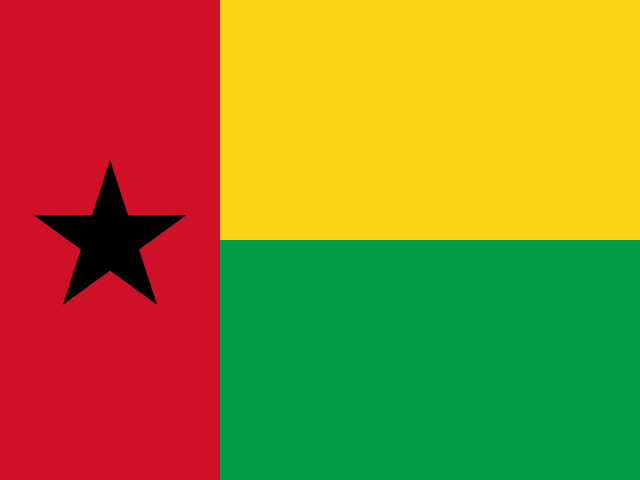
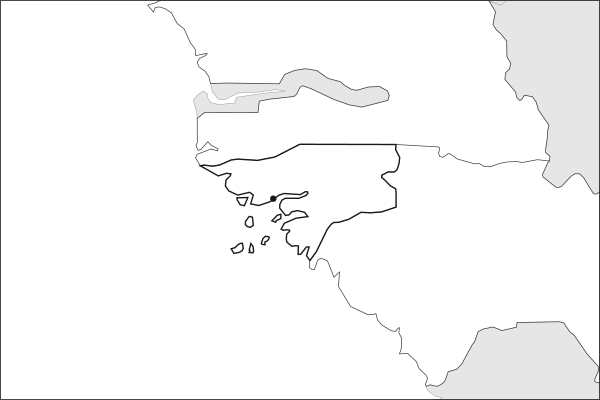
Flag of Guinea-BissauGuinea-Bissau in solid, land neighbours outlined, capital marked.
The app teaches each country through short hand written lenses: PLACE for physical geography, STORY for history and identity, NOW for the news, and THREAD for the ties between countries. Here is one of Guinea-Bissau's 5, in full.
PLACELens 1 of 5
A small coastal country with a labyrinth of islands
Guinea-Bissau occupies a low-lying stretch of the West African coast south of Senegal, its territory laced with rivers, estuaries, and mangrove channels. Offshore, the Bijagos Archipelago holds roughly 88 islands and islets, most uninhabited, forming a UNESCO Biosphere Reserve that shelters saltwater hippos, sea turtles, and rare birds. Flat, waterlogged terrain and the absence of deep-water ports have limited infrastructure, while the maze of coastal waterways has left the country exposed to illicit trafficking.
More on Bijagos Archipelago
The Bijagos are home to the Bijago people, who maintain matrilineal social structures and traditional animist practices. The archipelago is one of the most biodiverse marine areas in West Africa, and its isolation has preserved cultural practices largely untouched by colonial and post-colonial upheaval.
4 more lenses on Guinea-Bissau in the app
STORY A liberation struggle that inspired a continent
NOW Africa's first narco-state
STORY A Portuguese-speaking enclave in francophone West Africa
THREAD Caught between Lusophone identity and West African integration
Titles only. The app brings each lens back on a spaced repetition schedule set by how well you knew it: New, Hazy or Clear.
Compare Guinea-Bissau with another country
Opens the country comparison tool with population, area, income and more side by side, every figure dated.
Common questions
What is the capital of Guinea-Bissau?
The capital of Guinea-Bissau is Bissau. Bissau lies at about 11.9 degrees north and 15.6 degrees west. Guinea-Bissau is in Africa, in the region often called West Africa. It is home to about 2.25 million people. The world capitals quiz on this site tests every capital, and the printable capitals sheets cover each continent.
What is the population of Guinea-Bissau?
About 2.25 million people live in Guinea-Bissau, according to the World Bank figures for 2025. That makes it the 145th most populous of the 195 countries. With an area of 36,130 square kilometres, that is about 62 people per square kilometre.
What countries border Guinea-Bissau?
Guinea-Bissau shares land borders with 2 countries: Guinea and Senegal. The map on this page outlines each of them around Guinea-Bissau. The count includes only borders on land, not neighbours across a sea or a lake. Borders here follow Natural Earth at the 1:50 million scale, with Crimea shown as part of Ukraine and Western Sahara as a separate territory.
How big is Guinea-Bissau?
Guinea-Bissau covers 36,130 square kilometres, or about 13,950 square miles. That makes it the 134th largest of the 195 countries. The figure is total surface area, which includes inland water such as lakes and rivers. Its population of about 2.25 million gives a density of 62 people per square kilometre.
Guinea-Bissau is a country in Africa, in West Africa, with about 2.25 million people (2025) and an area of 36,130 square kilometres. Its capital is Bissau, and it shares land borders with 2 countries.
Capital
Bissau
Continent
Africa
Region
West Africa
Population
2,249,515 2025, World Bank. 145th of 195.
Area
36,130 km² (13,950 sq mi) World Bank, surface area. 134th largest of 195.
Population density
62 people per km²
Land neighbours
2: Guinea, Senegal
Official name
Republic of Guinea-Bissau
UN status
Member state
PLACE · from the Geography app
A small coastal country with a labyrinth of islands
Guinea-Bissau occupies a low-lying stretch of the West African coast south of Senegal, its territory laced with rivers, estuaries, and mangrove channels. Offshore, the Bijagos Archipelago holds roughly 88 islands and islets, most uninhabited, forming a UNESCO Biosphere Reserve that shelters saltwater hippos, sea turtles, and rare birds. Flat, waterlogged terrain and the absence of deep-water ports have limited infrastructure, while the maze of coastal waterways has left the country exposed to illicit trafficking.
Keep going on your iPhone. Scan for Geography: the world, one country at a time, about five minutes a day. No quizzes and no streaks. playgeography.app/countries/guinea-bissau/ · Map data: Natural Earth. Figures: World Bank and national sources, as listed on the page.
Geography · Country report
Guinea-Bissau
NameDate
Draw the flag
Colour Guinea-Bissau on the map, then fill in what you find.
Capital
Continent
Population
Area
Languages
Currency
Neighbours
Landmarks
Rivers or mountains
Three things I learned
1
2
3
One question I still have
?
Keep going on your iPhone. Scan for Geography: the world, one country at a time, about five minutes a day. No quizzes and no streaks. playgeography.app/countries/guinea-bissau/ · Map data: Natural Earth. Figures: World Bank and national sources, as listed on the page.