Mexico is a country in North America, with about 131.9 million people (2025) and an area of 1,957,194 square kilometres. Its capital is Mexico City, and it shares land borders with 3 countries.
By Team Geography·Last reviewed
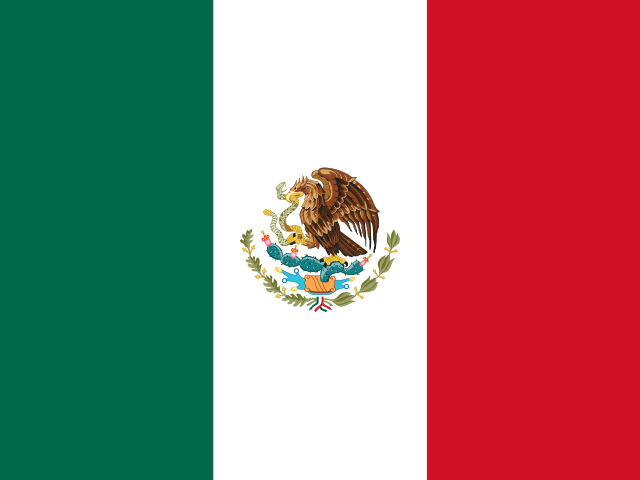
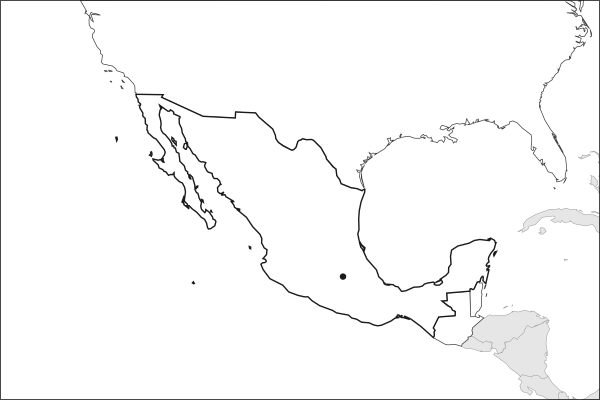
Flag of MexicoMexico in solid, land neighbours outlined, capital marked.
The app teaches each country through short hand written lenses: PLACE for physical geography, STORY for history and identity, NOW for the news, and THREAD for the ties between countries. Here is one of Mexico's 17, in full.
PLACELens 1 of 17
A ring of sinkholes marks an impact
The Yucatán Peninsula has almost no rivers. Its rock is porous limestone, so rain sinks immediately and travels underground, opening caves that collapse into water-filled sinkholes called cenotes. Those cenotes are not scattered at random: they cluster along an arc roughly 180 kilometers across, tracing the buried rim of the Chicxulub crater left by the asteroid that struck 66 million years ago. The impact that ended the dinosaurs still routes the peninsula's drinking water.
More on cenotes
Because surface water is scarce, Maya settlement followed the sinkholes. Chichén Itzá grew beside two of them, and its Sacred Cenote was dredged in the early twentieth century to reveal jade, gold and human remains thrown in as offerings. The fractured rock along the crater rim also channels groundwater faster than the surrounding limestone, which is why the ring is legible at all.
16 more lenses on Mexico in the app
THREAD Mexico is not just next to the United States; it is inside its economy
STORY Modern Mexico is a blend, not a simple inheritance
PLACE The U.S.-Mexico border is the busiest land crossing on Earth
NOW Sheinbaum's Mexico is racing to capture the nearshoring wave
PLACE Mexico's geography splits it into many Mexicos
STORY The Mexican Revolution still echoes in national identity
PLACE Football played in the thin air
STORY El Tri and the green shirt
NOW The stadium that opened a third World Cup
THREAD The rivalry that migration wrote across a border
PLACE Three host cities, three different climates
STORY Twice a host, twice a quarter-finalist
NOW The biggest league in the Americas
THREAD The regional family the Gold Cup made
NOW A capital that sinks as it drinks
THREAD A country of departure becomes a destination
Titles only. The app brings each lens back on a spaced repetition schedule set by how well you knew it: New, Hazy or Clear.
Compare Mexico with another country
Opens the country comparison tool with population, area, income and more side by side, every figure dated.
Common questions
What is the capital of Mexico?
The capital of Mexico is Mexico City. Mexico City lies at about 19.4 degrees north and 99.1 degrees west. Mexico is in North America. It is home to about 131.9 million people. The world capitals quiz on this site tests every capital, and the printable capitals sheets cover each continent.
What is the population of Mexico?
About 131.9 million people live in Mexico, according to the World Bank figures for 2025. That makes it the 11th most populous of the 195 countries. With an area of 1,957,194 square kilometres, that is about 67 people per square kilometre.
What countries border Mexico?
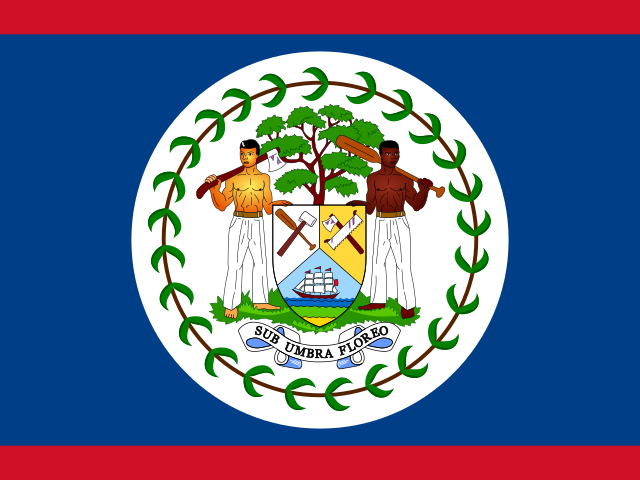
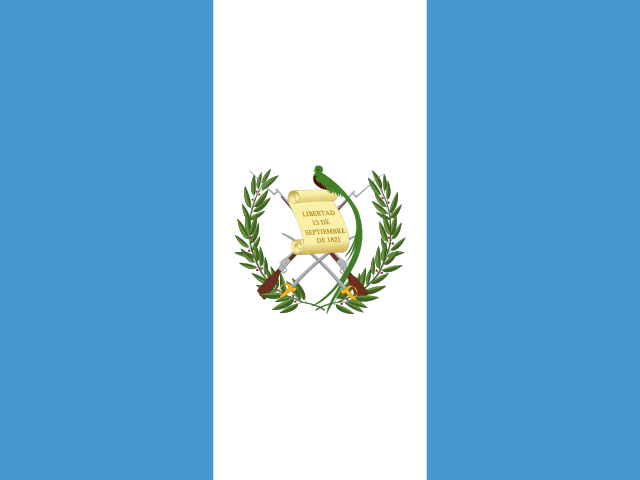
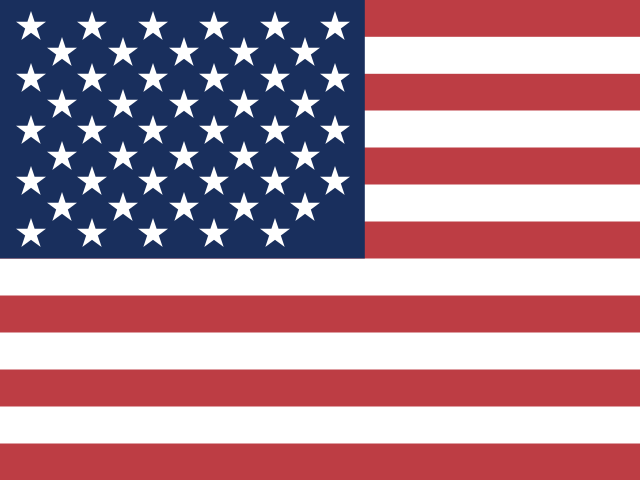
Mexico shares land borders with 3 countries: Belize, Guatemala and United States. The map on this page outlines each of them around Mexico. The count includes only borders on land, not neighbours across a sea or a lake. Borders here follow Natural Earth at the 1:50 million scale, with Crimea shown as part of Ukraine and Western Sahara as a separate territory.
How big is Mexico?
Mexico covers 1,957,194 square kilometres, or about 755,676 square miles. That makes it the 13th largest of the 195 countries. The figure is total surface area, which includes inland water such as lakes and rivers. Its population of about 131.9 million gives a density of 67 people per square kilometre.
Mexico is a country in North America, with about 131.9 million people (2025) and an area of 1,957,194 square kilometres. Its capital is Mexico City, and it shares land borders with 3 countries.
Capital
Mexico City
Continent
North America
Population
131,946,900 2025, World Bank. 11th of 195.
Area
1,957,194 km² (755,676 sq mi) World Bank, surface area. 13th largest of 195.
Population density
67 people per km²
Land neighbours
3: Belize, Guatemala, United States
Official name
United Mexican States
UN status
Member state
PLACE · from the Geography app
A ring of sinkholes marks an impact
The Yucatán Peninsula has almost no rivers. Its rock is porous limestone, so rain sinks immediately and travels underground, opening caves that collapse into water-filled sinkholes called cenotes. Those cenotes are not scattered at random: they cluster along an arc roughly 180 kilometers across, tracing the buried rim of the Chicxulub crater left by the asteroid that struck 66 million years ago. The impact that ended the dinosaurs still routes the peninsula's drinking water.
Keep going on your iPhone. Scan for Geography: the world, one country at a time, about five minutes a day. No quizzes and no streaks. playgeography.app/countries/mexico/ · Map data: Natural Earth. Figures: World Bank and national sources, as listed on the page.
Geography · Country report
Mexico
NameDate
Draw the flag
Colour Mexico on the map, then fill in what you find.
Capital
Continent
Population
Area
Languages
Currency
Neighbours
Landmarks
Rivers or mountains
Three things I learned
1
2
3
One question I still have
?
Keep going on your iPhone. Scan for Geography: the world, one country at a time, about five minutes a day. No quizzes and no streaks. playgeography.app/countries/mexico/ · Map data: Natural Earth. Figures: World Bank and national sources, as listed on the page.