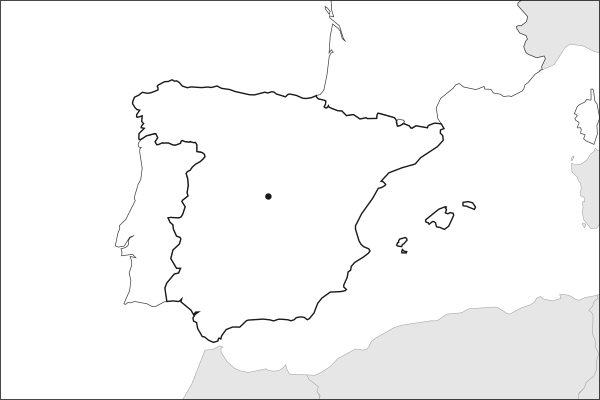
Spain is a country in Europe, with about 49.4 million people (2025) and an area of 505,976 square kilometres. Its capital is Madrid, and it shares land borders with 3 countries.
By Team Geography·Last reviewed
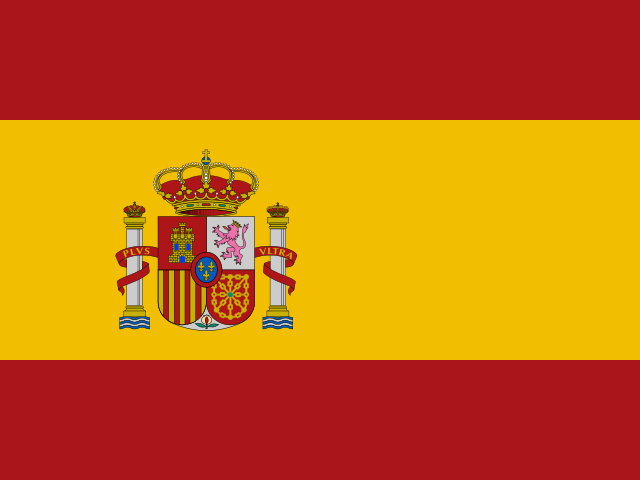
Flag of SpainSpain in solid, land neighbours outlined, capital marked.
The app teaches each country through short hand written lenses: PLACE for physical geography, STORY for history and identity, NOW for the news, and THREAD for the ties between countries. Here is one of Spain's 17, in full.
PLACELens 1 of 17
Spain is Europe's gate to Africa and the Atlantic
The Iberian Peninsula hangs at Europe's southwestern corner, separated from Africa by the Strait of Gibraltar, just 14 kilometers of water. Spain faces both the Mediterranean and the Atlantic, which historically made it a departure point for global empire and today makes it a landing point for migration. Its interior is a high, dry plateau (the Meseta) that concentrates population on the coasts and in Madrid.
More on Strait of Gibraltar
At its narrowest point, only 14 km separate Spain from Morocco. This chokepoint controls access between the Atlantic and the Mediterranean and has been strategically contested for centuries.
16 more lenses on Spain in the app
STORY Spain's regions pull in different directions
NOW Spain's housing crisis has become a political emergency
NOW Renewables and growth make Spain an unexpected European success story
THREAD Spain's colonial legacy built a linguistic sphere of half a billion people
PLACE A peninsula of regions
STORY The age of tiki-taka
NOW European champions who came home world champions
THREAD Spain across the ocean
PLACE Three clubs, three identities
STORY The school that built a team
NOW The league behind the world champions
THREAD When the ball came home
PLACE Spanish islands nearer Africa than to Spain
STORY The translators who handed Europe its books
THREAD An electrical island attached to a continent
PLACE A sea of plastic in Europe's desert
Titles only. The app brings each lens back on a spaced repetition schedule set by how well you knew it: New, Hazy or Clear.
Compare Spain with another country
Opens the country comparison tool with population, area, income and more side by side, every figure dated.
Common questions
What is the capital of Spain?
The capital of Spain is Madrid. Madrid lies at about 40.4 degrees north and 3.7 degrees west. Spain is in Europe. It is home to about 49.4 million people. The world capitals quiz on this site tests every capital, and the printable capitals sheets cover each continent.
What is the population of Spain?
About 49.4 million people live in Spain, according to the World Bank figures for 2025. That makes it the 32nd most populous of the 195 countries. With an area of 505,976 square kilometres, that is about 98 people per square kilometre.
What countries border Spain?
Spain shares land borders with 3 countries: Andorra, France and Portugal. The map on this page outlines each of them around Spain. The count includes only borders on land, not neighbours across a sea or a lake. Borders here follow Natural Earth at the 1:50 million scale, with Crimea shown as part of Ukraine and Western Sahara as a separate territory.
How big is Spain?
Spain covers 505,976 square kilometres, or about 195,358 square miles. That makes it the 53rd largest of the 195 countries. The figure is total surface area, which includes inland water such as lakes and rivers. Its population of about 49.4 million gives a density of 98 people per square kilometre.
Spain is a country in Europe, with about 49.4 million people (2025) and an area of 505,976 square kilometres. Its capital is Madrid, and it shares land borders with 3 countries.
Capital
Madrid
Continent
Europe
Population
49,355,143 2025, World Bank. 32nd of 195.
Area
505,976 km² (195,358 sq mi) World Bank, surface area. 53rd largest of 195.
Population density
98 people per km²
Land neighbours
3: Andorra, France, Portugal
Official name
Kingdom of Spain
UN status
Member state
PLACE · from the Geography app
Spain is Europe's gate to Africa and the Atlantic
The Iberian Peninsula hangs at Europe's southwestern corner, separated from Africa by the Strait of Gibraltar, just 14 kilometers of water. Spain faces both the Mediterranean and the Atlantic, which historically made it a departure point for global empire and today makes it a landing point for migration. Its interior is a high, dry plateau (the Meseta) that concentrates population on the coasts and in Madrid.
Keep going on your iPhone. Scan for Geography: the world, one country at a time, about five minutes a day. No quizzes and no streaks. playgeography.app/countries/spain/ · Map data: Natural Earth. Figures: World Bank and national sources, as listed on the page.
Geography · Country report
Spain
NameDate
Draw the flag
Colour Spain on the map, then fill in what you find.
Capital
Continent
Population
Area
Languages
Currency
Neighbours
Landmarks
Rivers or mountains
Three things I learned
1
2
3
One question I still have
?
Keep going on your iPhone. Scan for Geography: the world, one country at a time, about five minutes a day. No quizzes and no streaks. playgeography.app/countries/spain/ · Map data: Natural Earth. Figures: World Bank and national sources, as listed on the page.